
What A Burnham Premiership Could Mean
What A Burnham Premiership Could Mean By Lee Ryan, Editor, Design & Build UK Yesterday, I wrote that construction needs confidence. Today, with Andy Burnham emerging as the overwhelming favourite to replace Keir Starmer, the conversation naturally shifts to a different question. What could a Burnham premiership mean for construction? At the time of writing, […]

Jun 24, 2026
What A Burnham Premiership Could Mean
By Lee Ryan, Editor, Design & Build UK
Yesterday, I wrote that construction needs confidence.
Today, with Andy Burnham emerging as the overwhelming favourite to replace Keir Starmer, the conversation naturally shifts to a different question.
What could a Burnham premiership mean for construction?
At the time of writing, the Labour leadership process has yet to conclude. However, following Burnham's return to Westminster as MP for Makerfield and Wes Streeting's decision not to stand, momentum appears to be building rapidly behind the former Greater Manchester mayor.
For the construction industry, the significance of Burnham's rise is not political theatre. It is practical.
Unlike many Westminster politicians, Burnham arrives with a track record closely linked to regeneration, housing delivery, transport investment and regional economic growth. Over the past nine years, he has been one of the most recognisable figures behind Greater Manchester's transformation, overseeing a period that has seen significant development, investment and infrastructure delivery across the city region.
Whether that model can be replicated nationally remains to be seen, but it offers some clues as to where construction may sit within the next government's priorities.
Housing is perhaps the clearest example.
Throughout his time as Mayor of Greater Manchester, Burnham has consistently argued for greater investment in affordable and social housing. He has repeatedly called for a major programme of council housebuilding and has often described housing as one of the defining social and economic challenges facing the country.
For an industry facing ongoing housing shortages, planning pressures and affordability concerns, that position is likely to be welcomed by many organisations involved in residential delivery.
The challenge, of course, will be translating ambition into completed homes.
As I noted yesterday, developers continue to face viability pressures, rising costs and regulatory challenges. Housebuilding requires more than political support. It requires stable policy, confidence in the market and a planning system capable of supporting delivery at scale.
Infrastructure could also move higher up the agenda.
Few politicians have been more vocal than Burnham in calling for improved transport investment across the North. He has consistently campaigned for better rail connectivity, greater regional transport powers and long-term infrastructure funding.
His criticism of the cancellation of the northern leg of HS2 is well documented, as is his support for wider investment in Northern Powerhouse Rail and regional transport networks.
For contractors, consultants and suppliers working within infrastructure, that may provide encouragement that transport investment will remain a priority.
Skills are another area worth watching closely.
The construction sector continues to face significant labour shortages, with employers across the industry reporting difficulties recruiting both skilled trades and professional staff. Burnham has long advocated stronger technical education pathways and closer links between employers, colleges and training providers.
Many within construction would argue that this is an area requiring urgent attention regardless of who occupies Downing Street.
A stronger focus on apprenticeships, technical education and workforce development could prove just as important to the industry's future as housing or infrastructure policy.
Perhaps the most interesting question surrounds devolution.
Burnham has built much of his political reputation on the argument that local leaders are often best placed to make decisions about housing, regeneration and transport within their own regions. Greater Manchester has become one of the UK's most prominent examples of devolved decision-making.
If that philosophy finds its way into national government, construction could see greater powers and funding directed towards regional authorities and combined authorities across the country.
For local government, developers and investors, that could create new opportunities, while potentially accelerating decision-making closer to the communities affected by development.
The industry should also remember that Burnham inherits many of the same challenges facing Starmer.
Housing targets remain difficult to achieve. Public finances remain under pressure. Infrastructure commitments require funding. Planning reform remains contentious. Skills shortages continue to affect delivery.
No Prime Minister arrives with a magic solution.
Yet what construction will be looking for over the coming weeks is a sense of direction.
Yesterday, the industry's message was clear. Construction needs confidence.
Today, attention turns to whether the likely next Prime Minister can provide it.
Burnham's record suggests housing, infrastructure, skills and regional growth will remain central themes. If that proves to be the case, construction may find itself sitting closer to the heart of government than it has for many years.
The coming weeks will reveal whether that opportunity becomes reality.
For now, the industry watches and waits.
Related Posts

Warm Homes Bill Transforming British Housing
The Warm Homes Bill represents a £15 billion investment and one of the most significant policy interventions in the built environment in a generation. As implementation gathers pace across the UK, the programme is expected to play a central role in...
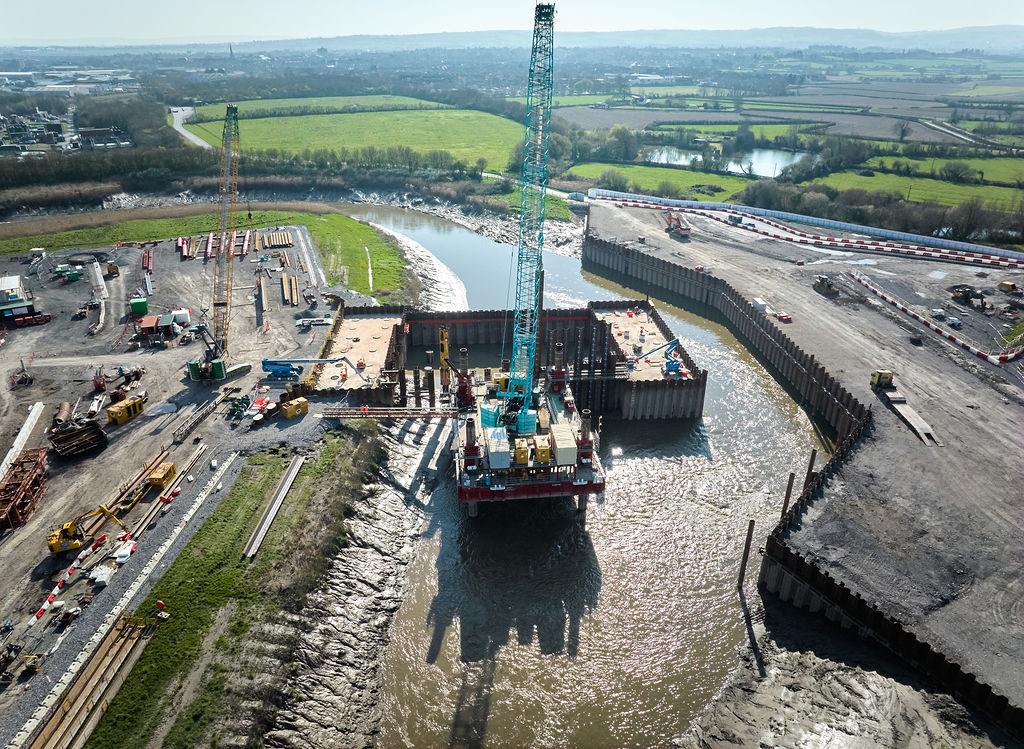
Bridgwater’s Flood Resilience
Bridgwater sits along the River Parrett estuary, around 17 kilometres upstream of the Severn Estuary. As one of the lowest and flattest regions in the country, it is particularly vulnerable to flooding. Today, around 11,300 homes, representing 60% of the...

Restoring Swindon’s Historic Baths
In the heart of Swindon’s Railway Village, the Grade II star listed Health Hydro has entered a new chapter in its long and distinctive history, reflecting both heritage conservation and modern adaptation. First opened in 1891 as the Great Western Railway Medical Fund...