
Bridgwater’s Flood Resilience
Bridgwater sits along the River Parrett estuary, around 17 kilometres upstream of the Severn Estuary. As one of the lowest and flattest regions in the country, it is particularly vulnerable to flooding. Today, around 11,300 homes, representing 60% of the town's housing stock, alongside 1,500 businesses and critical infrastructure remain at risk. The Bridgwater Tidal Barrier Scheme […]
Jul 16, 2026
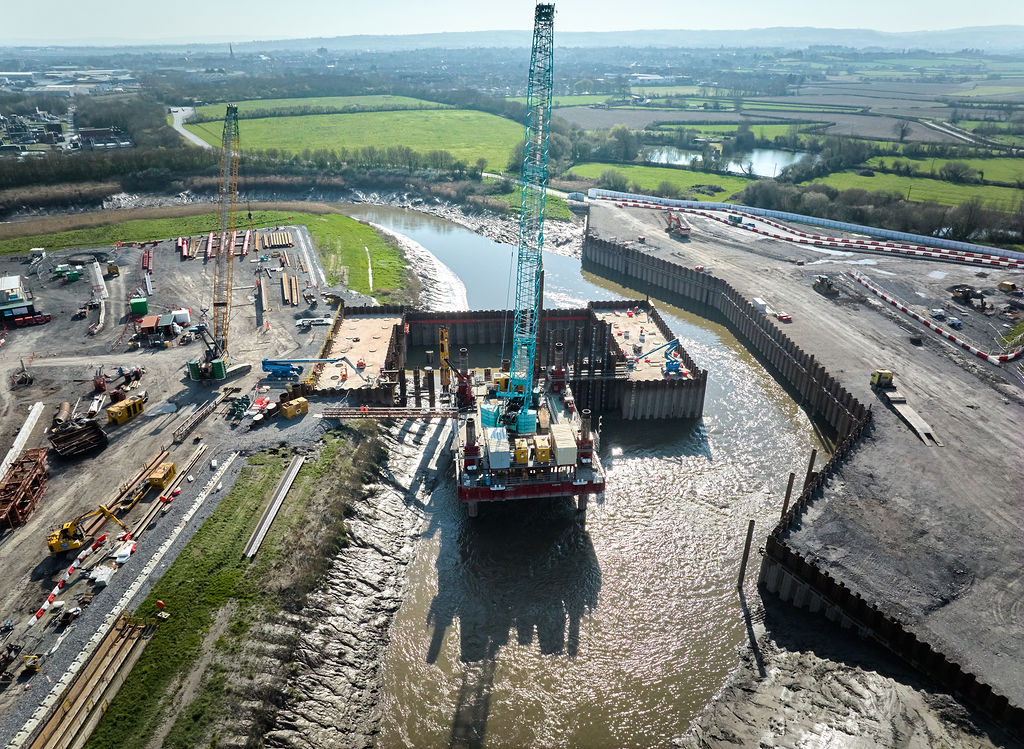
Bridgwater sits along the River Parrett estuary, around 17 kilometres upstream of the Severn Estuary. As one of the lowest and flattest regions in the country, it is particularly vulnerable to flooding. Today, around 11,300 homes, representing 60% of the town's housing stock, alongside 1,500 businesses and critical infrastructure remain at risk. The Bridgwater Tidal Barrier Scheme has been developed to address this challenge and forms a central part of the Somerset Levels and Moors Flood Action Plan introduced in 2014.
The scheme comprises three interconnected workstreams: the construction of a tidal barrier, the upgrading and construction of new and improved flood banks downstream near Chilton Trinity, Combwich and Pawlett, and the enhancement of fish and eel passage at up to 12 sites. Together, these measures are intended to reduce flood risk while strengthening the long-term resilience of the surrounding area. Supporting this objective, Ross Barton, Project Director at the Environment Agency, describes the project as "a complex undertaking, reflecting both the scale of the challenge and the importance of getting it right."
Reducing flood risk is also expected to create greater economic certainty by encouraging investment and supporting regeneration across Bridgwater. Dr Rachel Burden, Project Sponsor, explains: "By reducing flood risk, it helps unlock investment, support regeneration, and give businesses the confidence to operate, expand and plan for the long term. This is critical in a flood-vulnerable area, where uncertainty can otherwise limit economic potential."
The project is also delivering economic benefits during construction by supporting employment, skills development and local supply chains, while maintaining a focus on long-term resilience. Reinforcing this priority, Barton states: "Our focus is on providing a robust, resilient solution that protects communities."
The wider significance of the scheme extends beyond flood defence, positioning it as an important part of Bridgwater's long-term development. Burden argues: "The Bridgwater Tidal Barrier Scheme is a key enabler for sustainable growth in Bridgwater and the wider Somerset area [...] and gives businesses the confidence to operate, expand and plan for the long term." Together, these comments demonstrate how the scheme is intended to deliver lasting environmental, economic and community benefits.
Environmental considerations remain central to the design and delivery of the project. Sustainability measures focus on reducing carbon emissions, protecting ecosystems and improving climate resilience. Low carbon concrete, recycled steel and off-site construction methods are being used to minimise emissions, while earthworks are scheduled during drier months to reduce energy consumption. Digital tools, including Building Information Modelling (BIM) enable project teams to monitor carbon in real time and refine designs, contributing to a reported 53% reduction in embodied carbon. These measures support more efficient decision making while helping to achieve wider climate objectives.
The Environment Agency is delivering the scheme in partnership with Kier and AtkinsRealis, with collaboration playing an important role throughout the project. Reflecting on this partnership, Barton observes: "Their depth of experience in flood defence delivery and programme management, combined with a clear commitment to collaboration and sustainability, is helping us deliver a scheme that supports a resilient, thriving future for Bridgwater and surrounding communities."
A significant feature of the project is the use of natural resources available on site. Excavated borrow pits at Chilton Trinity, Pawlett and Combwich are providing material for flood embankments, reducing the need for imported aggregates and lowering transport emissions. Once construction is complete, these areas will be transformed into wetland habitats, creating around four hectares of new biodiversity and strengthening ecological links between the Somerset Levels and Moors and the Severn Estuary. This approach reduces the environmental impact of construction while delivering lasting ecological benefits.
Wildlife protection has also been carefully integrated into the construction programme. Work has been scheduled to avoid sensitive periods, including the nesting season of species such as the marsh harrier. Temporary construction infrastructure has been designed with future use in mind, with some access routes being converted into permanent footpaths, including a new pedestrian and cycle bridge across the River Parrett.
At its core, the Bridgwater Tidal Barrier Scheme is designed to help communities adapt to the increasing impacts of climate change. Rising sea levels and more frequent extreme weather events continue to increase the importance of resilient infrastructure for coastal and estuarine communities. By combining major flood defence infrastructure with environmental enhancement, the scheme aims to deliver long-term benefits for people, businesses and the natural environment. For Bridgwater and the surrounding area, it represents an investment in long-term resilience, economic confidence and a more sustainable future.
Sponsored Advert

Related Posts

G F Tomlinson completes state-of-the-art Clinical Training Centre for University of Nottingham
Midlands contractor, G F Tomlinson, has successfully developed the University of Nottingham’s new Clinical Training Centre (CTC), delivering a cutting-edge facility that will provide immersive teaching environments for the next generation of healthcare professionals....

McLaren Construction appointed to deliver regional distribution centre for Waitrose and DHL in Avonmouth
McLaren Construction Midlands & North has been appointed to deliver a multi-million-pound warehouse redevelopment and logistics project at MountPark 360 in Avonmouth on behalf of the Waitrose and DHL Supply Chain. The scheme will transform an existing warehouse,...

New Forest District Council advises housing tenants on additional rights under Awaab’s Law
New Forest District Council (NFDC) is reminding housing tenants about important new legal protections that come into force on 30 November under the next phase of Awaab's Law. Originally introduced in October 2025, Awaab's Law focused on ensuring landlords took prompt...