
Battersea’s Remarkable Second Life
The transformation of Battersea Power Station stands as one of the most ambitious heritage regeneration projects undertaken in the United Kingdom in recent decades. Once responsible for supplying electricity to around one fifth of London, the Grade II* listed landmark operated from 1933 until its decommissioning in 1983. After decades of uncertainty surrounding its future, the iconic […]

Aug 3, 2026
The transformation of Battersea Power Station stands as one of the most ambitious heritage regeneration projects undertaken in the United Kingdom in recent decades. Once responsible for supplying electricity to around one fifth of London, the Grade II* listed landmark operated from 1933 until its decommissioning in 1983. After decades of uncertainty surrounding its future, the iconic structure has been carefully restored and repurposed as the centrepiece of a mixed-use development that demonstrates how historic industrial assets can be successfully adapted for contemporary needs while preserving their architectural significance.
Designed by Sir Giles Gilbert Scott, Battersea Power Station has long occupied a unique place within Britain's industrial heritage. Its monumental brick façade and four distinctive chimneys have become recognised symbols of London's skyline. The redevelopment of the 42-acre site sought not only to secure the future of the listed building but also to establish a new town centre incorporating residential, commercial, cultural and leisure uses. This approach reflects a growing recognition across the heritage sector that long term conservation is often best achieved through sensitive adaptation rather than preservation alone.
The scale and complexity of the project required a careful balance between conservation and innovation. WilkinsonEyre oversaw the retrofit of the power station itself, ensuring that significant historic features were retained while enabling the building to accommodate modern occupiers and visitors. Research published by Historic England consistently highlights that heritage led regeneration can stimulate economic growth, attract investment and strengthen local identity. Battersea Power Station provides a compelling example of these principles in practice, combining restoration with commercial viability to secure the future of a nationally significant asset.
The success of the scheme can be measured not only through its conservation achievements but also through its contribution to the wider community. Since opening to the public in October 2022, Battersea Power Station has welcomed more than eight million visitors and now accommodates over 150 shops, restaurants, leisure venues and workplaces. The development has also delivered substantial employment opportunities. Data provided by Battersea Power Station Development Company shows that more than 2,500 jobs were created through the opening of the Power Station and Electric Boulevard, while approximately 20,000 long term positions are expected across the completed masterplan. Through the Battersea Academy for Skills and Employment, local residents have also been connected with training and career opportunities generated by the project.
The redevelopment has been equally significant from an urban planning perspective. Alongside the restoration of the power station itself, the wider scheme has introduced new public spaces, improved transport infrastructure and enhanced access to the River Thames. The development will ultimately provide 19 acres of public realm, including a 6-acre riverfront park and the restoration of the Grade II* listed Coaling Jetty. These interventions have helped reconnect an historically inaccessible industrial site with the surrounding community while maintaining its distinctive character.
Jason Cowell, Senior Project Director at Battersea Power Station Development Company, praised the collaborative effort behind the restoration, noting: "The professionalism and expertise the Turner & Townsend team brought to the project was fantastic. They very much became a key part of the development team, and it was a pleasure to work together to transform the Grade II* listed Power Station into the exciting new, culture, retail and leisure destination it is today." His comments highlight the multidisciplinary coordination required to deliver a project of such complexity and heritage sensitivity.
Attention is now turning towards the remaining phases of development. Studio Egret West has unveiled concept proposals for Phases 4 to 7, adapting the original masterplan created by Rafael Viñoly more than 15 years ago to reflect changing patterns of living, working and leisure. The proposals include up to 300,000m² of additional homes, offices, cultural facilities and community spaces, alongside enhanced green connections linking the site to Nine Elms Park. The evolving vision demonstrates how large-scale regeneration projects must remain responsive to social and economic change while maintaining a coherent long-term strategy.
Battersea Power Station demonstrates that heritage conservation and contemporary development need not be competing objectives, but can instead work together to create lasting economic, social and cultural value. The project has safeguarded one of Britain's most recognisable industrial landmarks while establishing a vibrant destination for future generations. As cities across the UK continue to explore the potential of historic buildings, Battersea Power Station offers a powerful model for how ambitious restoration, thoughtful design and strategic investment can breathe new life into nationally important heritage assets.
Sponsored Advert

Related Posts
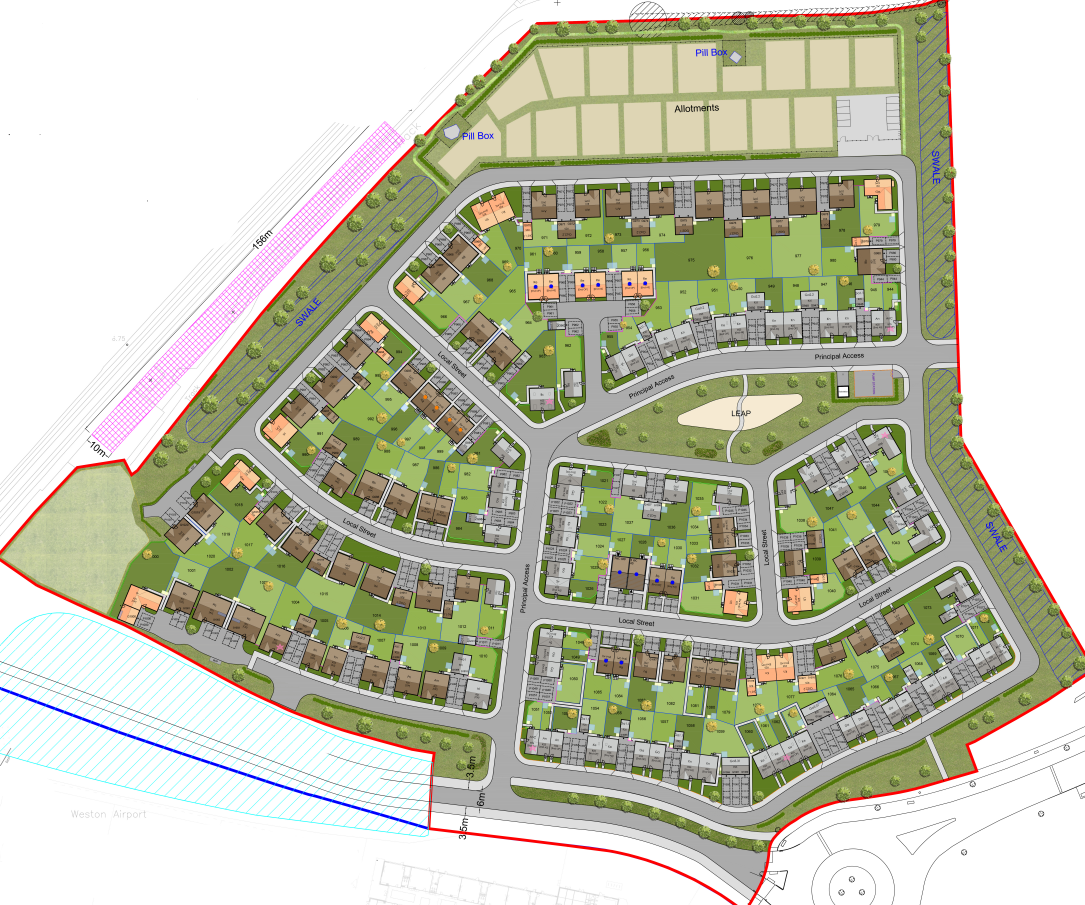
Latest approval for major Weston housing development
The housebuilder behind the popular Haywood Village scheme in Weston-super-Mare has secured planning permission for the latest phase at the site. Persimmon Homes Severn Valley reserved matters application was awarded consent by North Somerset Council, paving the way...

Why insulated garage doors matter for the Future Homes Standard
The Future Homes and Buildings Standard has moved from proposal to a fixed timetable. Published on 24 March 2026, it will come into force exactly a year later in March 2027, requiring new homes in England to produce roughly 75 to 80 per cent less carbon than those...

Why retrofit still has no answer for overheating
Britain has spent the better part of a decade getting very good at one half of a problem. Insulation, airtightness, better glazing and heat pumps have been pushed hard through funding schemes, assessment frameworks and training programmes, and the housing stock is...