
The waiting game: Could empty development sites help tackle temporary housing demand?
Thousands of homes across England have planning permission but no build date. Sites sit approved and inactive for years, while local authorities struggle to house families who need somewhere to live now. Councils are spending billions on temporary accommodation annually, and the permanent housing that would relieve that pressure remains years from delivery on many […]
Sep 21, 2026
Thousands of homes across England have planning permission but no build date. Sites sit approved and inactive for years, while local authorities struggle to house families who need somewhere to live now. Councils are spending billions on temporary accommodation annually, and the permanent housing that would relieve that pressure remains years from delivery on many sites.
The shortfall is placing growing pressure on local authority budgets. Modular transitional housing could make temporary use of approved development sites, providing safe, dignified temporary homes until permanent construction begins. This opportunity extends across a broad range of land types, including brownfield sites, infill land, regeneration projects and wider development land, where conditions allow for temporary use. It would help councils meet immediate demand, though it is not a replacement for the permanent homes England still needs.
Approved but inactive: the state of housing delivery
Large housing developments rarely follow a straight line from planning consent to construction. Lichfields research found that sites of 2,000 or more homes take an average of eight years to deliver their first dwelling from initial planning application. Even smaller sites of under 500 homes take an average of three years between submitting an outline application and delivering their first homes.
Once reserved matters are approved, full planning permission in England requires construction to begin within three years or the consent lapses, though developers can preserve a permission with minimal early groundwork while the main build remains years away.
Planning conditions need to be signed off, legal agreements completed and utilities connected before construction can begin. Larger developments are also delivered in phases, which can leave parts of a site inactive for years. According to Savills' Q4 2024 housing supply analysis, around 12% more homes gained planning consent in 2024 than were built, a wider gap than in 2023. Previous analysis from the same firm found that approximately 26% of consented homes were not built within a decade of permission.
As a result, the land that carries housing permission sits unused, sometimes for years at a time, while the communities those permissions were intended to serve continue to face acute housing pressure.
£2.84 billion and rising: the cost of the accommodation gap
The scale of temporary accommodation demand in England has reached levels that strain both public services and public finances. MHCLG figures show that on 30 September 2025, 134,760 households were living in temporary accommodation, a 7% increase on the same point the previous year. Of those, more than 85,700 were households with children, representing over 176,000 children living in accommodation that was never designed as a long-term home.
The financial burden falling on local authorities has become critical. Councils spent £2.84 billion on temporary accommodation in 2024/25, with net expenditure of £1.43 billion after subsidies. London boroughs alone were spending close to £5 million a day. Much of the accommodation being used is the most expensive and least suitable available: according to the Institute for Government, B&Bs now account for 12% of placements in England, up from 3.8% in 2009, with families sometimes remaining in that setting for weeks or months.
What makes this particularly difficult to resolve is the structure of the problem. Councils cannot build their way out of the temporary accommodation crisis in the short term, because the permanent supply that would relieve it is the same supply sitting in a planning and delivery pipeline that takes years to complete.
Temporary modular housing: the pre-construction opportunity
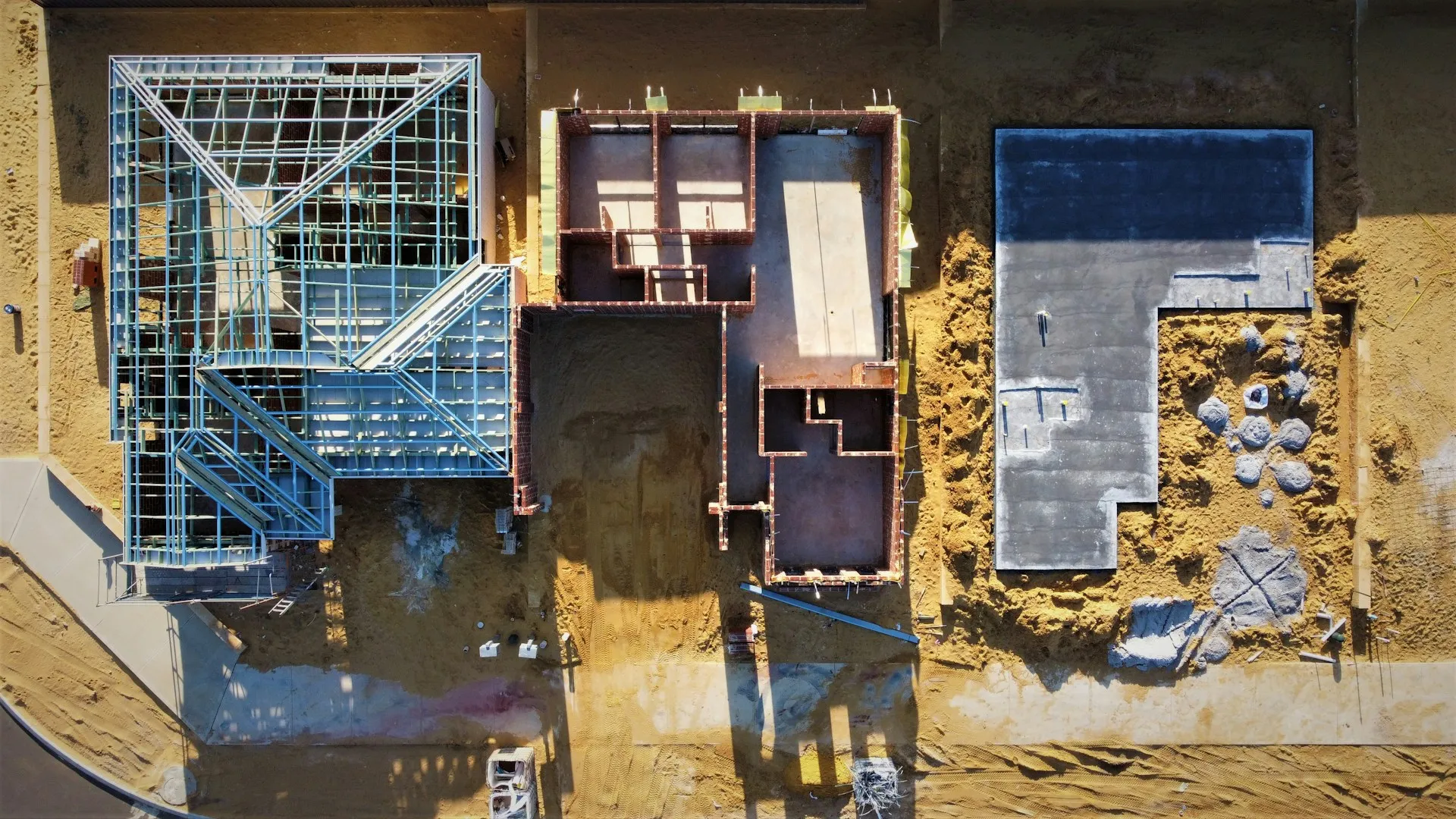
Development sites approved for residential use but awaiting construction represent an underused resource in the housing system. The sites have passed planning scrutiny and are, by definition, suitable for residential occupation. In many cases, they will remain unoccupied for years before groundbreaking.
The potential for transitional housing to make better use of underutilised land was also recently discussed by Portakabin at an event held at the Houses of Parliament, ahead of the publication of its socio-economic report later this month.
Not every approved site will be suitable for interim residential use. Access, utility connections, site security and the stage of pre-commencement conditions all shape what is possible.
Doing so requires buildings that can be installed fast, operated safely and relocated without leaving a structural legacy when permanent development is ready to proceed. The transitional housing model from Portakabin is built around those requirements.
Up to 30 self-contained apartments can be delivered within 12 weeks, with units ranging from one to three bedrooms. Two-bedroom units include a fitted kitchen, bathroom and separate living space, providing a genuine family home rather than an emergency stopgap. The buildings meet Residential Building Regulations, are installed on a temporary basis and removed or relocated at the end of the occupancy period, with no ongoing physical legacy for the site. Delivery is structured as a rental model aligned to the duration of need, which avoids long-term capital commitment from local authorities already under financial pressure.
For a site that has received outline permission but is three to five years from its first permanent homes, that is a substantial window. When construction eventually begins, the buildings move on to serve the same purpose elsewhere.
What the rental model changes for local authorities
Local authorities managing homelessness budgets do not have capital to deploy on assets they will only need for two or three years. A rental arrangement aligned to the duration of occupancy changes the equation: the cost is operational rather than capital, the commitment ends when the development proceeds, and there is no residual asset to dispose of.
Mark Fox, Director of Housing Solutions and Key Partnerships at Portakabin, said: "Sites with planning permission and a three-to-five-year delivery window represent a genuine opportunity to address temporary accommodation pressure in a way that has simply not been available before. The families who need housing now cannot wait for permanent construction to complete. A rental model on an approved site means the land is providing homes for families who need them now, the local authority is spending far less per household than it would on nightly paid accommodation, and the buildings are gone the moment the developer is ready to build."
Making approved land work for families now
The government's target of 1.5 million homes over this parliament requires a step change in delivery that, on current projections, will take years to achieve. Approved sites sitting inactive in the interim are a missed opportunity within a system that has already done the hard work of granting permission.
The question for councils, developers and housing authorities is whether that gap can be used more productively.
Modular transitional housing on approved and underutilised development land, including brownfield sites, infill opportunities and regeneration projects does not resolve the underlying shortage of permanent homes. What it does is convert idle approved land into operational temporary accommodation, at a cost that is a fraction of nightly paid alternatives, for as long as the pre-construction period requires. When construction eventually begins, the buildings relocate and the cycle continues.
For a housing crisis with no fast resolution, that kind of incremental, repeatable approach deserves a place in delivery planning from day one.
Sponsored Advert

Related Posts
Latest approval for major Weston housing development
The housebuilder behind the popular Haywood Village scheme in Weston-super-Mare has secured planning permission for the latest phase at the site. Persimmon Homes Severn Valley reserved matters application was awarded consent by North Somerset Council, paving the way...

Why insulated garage doors matter for the Future Homes Standard
The Future Homes and Buildings Standard has moved from proposal to a fixed timetable. Published on 24 March 2026, it will come into force exactly a year later in March 2027, requiring new homes in England to produce roughly 75 to 80 per cent less carbon than those...

Why retrofit still has no answer for overheating
Britain has spent the better part of a decade getting very good at one half of a problem. Insulation, airtightness, better glazing and heat pumps have been pushed hard through funding schemes, assessment frameworks and training programmes, and the housing stock is...