
Why Developers Are Specifying GRP Garage Doors
On most new-build sites, the front door stopped being a purely aesthetic choice some years ago. Composite has become the default entrance door across British housing, picked by developers and specifiers because it holds up to weather, needs almost no upkeep and meets the thermal numbers that building control now expects. The look still matters, […]
Jun 24, 2026
On most new-build sites, the front door stopped being a purely aesthetic choice some years ago. Composite has become the default entrance door across British housing, picked by developers and specifiers because it holds up to weather, needs almost no upkeep and meets the thermal numbers that building control now expects. The look still matters, but performance is what decides it.
The garage door is the last external component to catch up with that thinking. For years it has been treated as a finishing item, chosen late and on price, often in a material that dates or fails well before the rest of the build. That is beginning to change, and the material driving the change is the same one that reshaped the front door: glass reinforced polyester, or GRP.
The specification has already shifted once
It helps to remember why composite won at the front door. Tighter energy rules made thermal performance a baseline requirement rather than a selling point, and developers who were already balancing growth with tighter regulation wanted components that would pass building control without fuss and without callbacks. A door that warps, swells or needs repainting inside a few winters is a warranty claim waiting to happen, and on a multi-plot scheme that risk multiplies fast. Aftercare on a finished plot eats margin, so anything that lowers the chance of a return visit is worth specifying in from the start.
Garage doors sit under the same pressures. Where a garage is integral to the dwelling or shares a heated wall, its thermal behaviour feeds into the building’s overall performance, and the Part L thermal requirements that govern conservation of fuel and power treat the whole envelope rather than the obvious openings alone. A poorly chosen garage door is a weak point in an otherwise well-sealed build.
What GRP actually does
GRP earns its place on the merits of the material rather than the marketing. It will not rot, rust or corrode, and it does not warp or swell as humidity and temperature swing through a British year. Its strength-to-weight ratio is high, which keeps a large door manageable on its mechanism without resorting to heavy steel. The colour and finish sit in a gel coat that holds up under UV rather than a paint layer that chalks and fades, so the door looks much the same in year ten as it did on handover. It also sidesteps the upkeep that made real timber a liability on exposed elevations, where a wood door can need refinishing every couple of years to stay weathertight. Where the door is built over an insulated core, that dimensional stability also helps its contribution to the thermal envelope rather than working against it.
For a developer, two properties matter most. The first is consistency: GRP can be matched to a specific RAL colour and a woodgrain finish, which lets a garage door line up with the windows, fascias and front door across an entire scheme rather than clashing with them. The second is fit. A door made to the exact opening avoids the packing and trimming that off-the-shelf sizes force on site, which is why it pays to specify a manufacturer that builds to measure. CDC Garage Doors, for example, produces bespoke GRP garage doors sized to the structural opening, for a cleaner line and an easier sign-off on inspection. Either way, the durability and appearance GRP promises only fully deliver when the door is individually specified and finished as carefully as the rest of the elevation rather than bolted on at the end.
Security and compliance
A garage door is also an access point, and on new homes that brings it within the same security conversation as every other opening. Buyers and warranty providers increasingly expect doors to carry recognised security credentials, and the police-backed Secured by Design scheme sets the standard most specifiers now recognise, certifying products that resist a determined attempt at forced entry. GRP doors can be built with multipoint locking and the robust hardware that scheme demands, so the material choice and the security specification support each other rather than pulling in opposite directions.
This is where late, price-led decisions tend to cost the most. A garage door bought purely on headline figure may need a separate security upgrade to satisfy a buyer or an insurer, and the saving disappears. Specifying a door that already meets the expectation removes a step and a risk before either becomes a problem. On a development sold partly on its security credentials, a consistent specification across the garage and the entrance door also makes the claim easier to stand behind.
The whole-life argument
The strongest case for GRP is the one a developer feels over the life of a scheme rather than on the day of purchase. A door that lasts decades without repainting or replacement takes a recurring maintenance cost off the table, and on developments where the builder keeps an interest or a management responsibility that matters to the numbers. It also fits the direction the wider industry is moving in, with bodies like RICS pushing whole-life reporting across the built environment so that the long-term impact of a specification, rather than its upfront cost alone, is what gets measured. Standardising the same door across every plot compounds the benefit, since it simplifies maintenance and keeps replacement parts to a single, predictable set.
For the buyer, a door that still looks new years after completion protects the kerb appeal a scheme was sold on, which feeds back into resale values and the developer’s reputation in an area. Seen that way, the garage door stops being a finishing afterthought and becomes a small but real lever on a development’s running cost and standing. The material that proved the point at the front door is simply making the same case a few metres further along the elevation.
A specification-stage decision
None of this means every scheme needs the most expensive door on the market. It means the garage door deserves to be decided at specification stage, alongside the windows and the entrance door, on the same performance terms. Developers who make that move get a component that matches the rest of the build, passes the checks that matter and holds its appearance and function for years. The thinking is not new. It is simply the thinking that already changed the front door, finally reaching the garage.
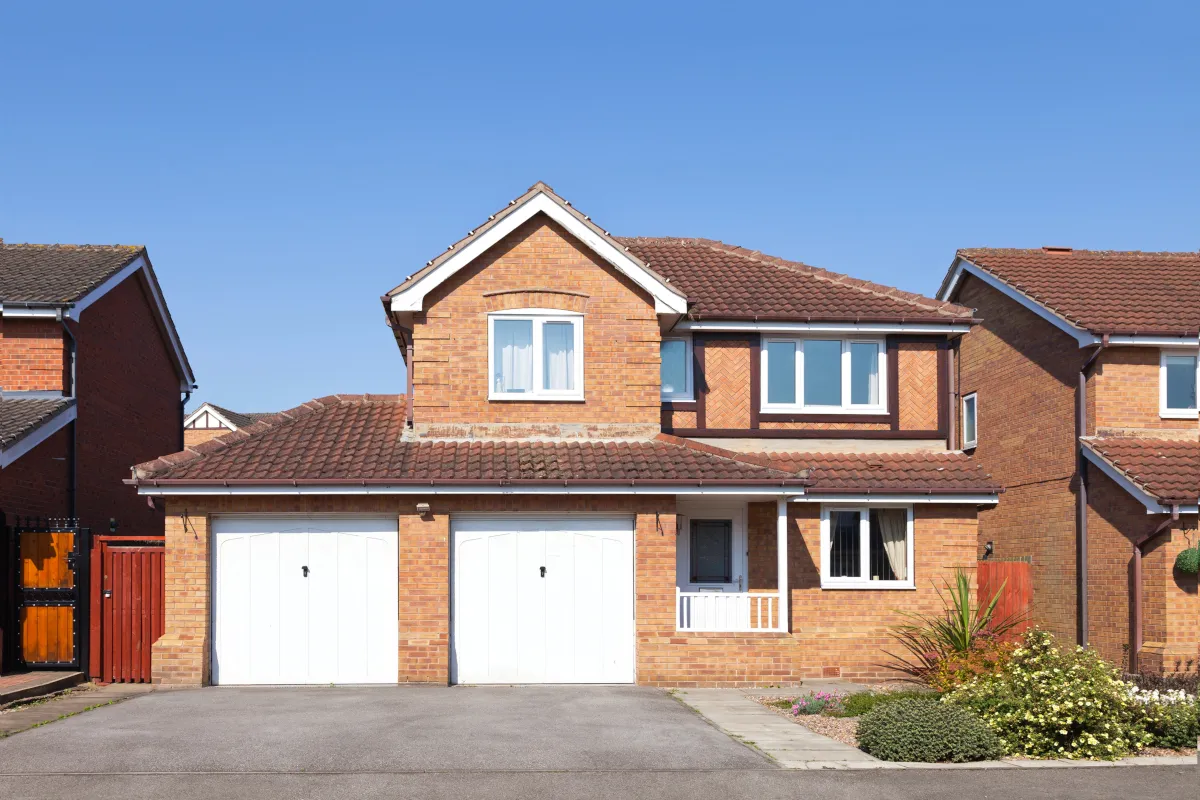
Featured Image source: Deposit photos
Sponsored Advert

Related Posts

Railpen secures planning consent for 145,000 SQ FT Phase 2 of High Wycombe X following major pre-lets
Railpen, manager of the around £36bn railways pension scheme in the UK, has secured planning consent for Phase 2 of High Wycombe X alongside two major pre-lets, delivering another significant milestone in the continued growth of its...

G F Tomlinson strengthens growth strategy with business development appointment
Midlands contractor, G F Tomlinson, has bolstered its team with the appointment of Glenn Slater as Business Development Manager. Glenn joins G F Tomlinson with 31 years’ experience in business development within the construction industry, with a focus on Public Sector...

Glencar Completes Martland Park Development in Wigan
A 101,805 sq ft BREEAM Excellent industrial and logistics facility delivered for Hillwood UK at Martland Park, Wigan. August 2026 Glencar has completed works at Martland Park in Wigan, achieving practical completion on a 101,805 sq ft industrial and logistics unit...