
Construction Needs Confidence
Keir Starmer's resignation as Prime Minister has triggered another period of political uncertainty, but for the construction industry the question is not simply who walks into Downing Street next. It is whether housing, planning reform, infrastructure investment and public sector delivery can continue moving forward without interruption. Speaking daily with contractors, developers, consultants, manufacturers and […]

Jun 22, 2026
Keir Starmer's resignation as Prime Minister has triggered another period of political uncertainty, but for the construction industry the question is not simply who walks into Downing Street next. It is whether housing, planning reform, infrastructure investment and public sector delivery can continue moving forward without interruption.
Speaking daily with contractors, developers, consultants, manufacturers and suppliers across the UK, the message I hear most often is not about politics. It is about certainty.
The built environment has lived through repeated political resets over the past decade. The UK is now heading towards its seventh Prime Minister in ten years and, while financial markets are often able to absorb leadership changes quickly, construction operates on far longer timescales. Sites, tenders, procurement frameworks, planning decisions, investment cases and supply chain commitments cannot simply be paused every time Westminster enters another period of transition.
Starmer confirmed he would step down after accepting the view of his parliamentary party on Labour's future leadership. He will remain in post until a successor is chosen, with Andy Burnham widely expected to emerge as the frontrunner.
For construction, however, the concern is not simply who comes next. It is the risk of drift during the transition.
If there is one theme that emerges from the industry's reaction, it is confidence. Richard Steer, chair of Gleeds, perhaps summarised the mood best when he warned that markets "tend to adapt quickly to political change" but are "less tolerant of uncertainty".
"The built environment sector is looking for confidence around infrastructure investment, housing delivery and planning reform," he said.
That single word, confidence, appears repeatedly throughout the sector's response.
When Labour entered government, much of the industry welcomed its focus on housebuilding, planning reform and economic growth. Whether organisations agreed with every detail of the agenda was almost secondary to the fact that there appeared to be a clear direction of travel. The commitment to increase housing supply and accelerate development was broadly viewed as a positive signal for an industry that thrives on certainty and long-term planning.
Yet there remains a clear distinction between ambition and delivery.
Neil Jefferson, chief executive of the Home Builders Federation, acknowledged that Starmer "deserves credit" for the government's ambition to increase housing supply and its positive engagement with the industry. However, he also highlighted the growing pressures facing developers.
"Increased taxes and policy costs on development, alongside a lack of support for buyers, have constrained housebuilding and created an increasingly challenging environment."
Those comments reflect a wider reality facing residential development. Housing targets may remain politically attractive, but delivery ultimately relies on developers operating within viable market conditions. Planning delays, financing costs, regulatory requirements and wider economic pressures continue to affect the pace at which new homes can be brought forward.
A similar frustration is evident among smaller builders.
Brian Berry, chief executive of the Federation of Master Builders, welcomed the government's pro-building rhetoric but warned that ambition alone has not translated into results on the ground.
"It was welcome to see a pro-building agenda placed at the heart of Starmer's government, but words only go so far, and ambition has not yet resulted in delivery on the ground."
For SME builders, rising costs, recruitment challenges, planning delays and weakening consumer confidence continue to create significant barriers. Given that smaller firms make up the overwhelming majority of construction businesses across the UK, their ability to deliver housing and regeneration projects remains critical to meeting national ambitions.
Housing organisations are also urging continuity rather than reinvention. Gavin Smart, chief executive of the Chartered Institute of Housing, has highlighted the importance of maintaining momentum around housing supply, renters' rights and social housing provision. The message coming from the housing sector is straightforward: whatever happens politically, housing must remain a national priority.
Should Andy Burnham take the role, construction will immediately begin assessing how his record as Mayor of Greater Manchester translates onto the national stage. His support for council housebuilding, stronger landlord regulation, technical education and transport investment means he arrives with an established built environment agenda. The question will be whether that momentum accelerates or stalls.
Paul Rickard, chief executive of Pocket Living, argued that Starmer's government had "finally grasped the need for a radical reform of the planning system and the political imperative of building new homes". However, he also warned that viability pressures and wider economic headwinds continue to undermine delivery across the sector.
Infrastructure presents an equally important test.
Large-scale projects depend on long-term certainty. Contractors, consultants, manufacturers and suppliers make investment decisions based on visible pipelines stretching years into the future. Any suggestion of policy hesitation inevitably creates concern.
Andrew Reynolds, chief executive of RLB UK & Europe, acknowledged that leadership changes naturally create uncertainty but argued that what the market requires now is "policy stability, swift decision making and long-term certainty".
Others share that view.
Graham Robinson of Oxford Economics and Pinsent Masons has warned that delays in appointing a successor could slow infrastructure decisions and private investment at precisely the moment the economy needs momentum. Bradley Lay, founder of TrueNorth Capital Group, described the danger of political transitions creating a form of business paralysis.
"The immediate concern for construction firms is not necessarily who replaces Starmer, but the hesitation created while everyone waits for clarity."
That hesitation may prove more damaging than any individual policy decision.
Construction continues to face labour shortages, planning bottlenecks, cost inflation and increasingly tight margins. At a time when confidence is already fragile, uncertainty has the potential to delay investment, slow procurement and reduce development activity.
Azfar Rizvi of Aldermore Bank has also warned that political instability could create particular challenges for SME housebuilders, where consistency and confidence are essential for keeping projects moving.
Looking across the responses from developers, contractors, consultants, lenders and industry bodies, there is remarkably little disagreement about what comes next.
The industry is not demanding perfection.
It is not asking for another sweeping vision document.
It is not looking for another political reset.
What it wants is certainty.
The next Prime Minister will inherit an industry ready to build homes, deliver infrastructure and support economic growth. The challenge will be providing the confidence required for it to do so.
Starmer's resignation may dominate today's headlines, but construction will judge its impact through the projects approved or delayed, the contracts awarded or paused, and the homes started or stalled over the months ahead.
The industry's message is clear. Keep planning reform moving. Protect infrastructure investment. Support SME builders. Maintain housing as a national priority. Give public and private sector clients confidence to continue procuring, investing and delivering.
From where I sit as Editor of Design & Build UK, the message could not be clearer. Construction is ready to invest, employ, innovate and deliver. What it needs from government is consistency. The next Prime Minister will be judged not by promises or political manoeuvring, but by whether projects continue moving forward. Construction does not need another reset. It needs confidence, stability and decisions that stick.
By Lee Ryan, Editor, Design & Build UK
Related Posts
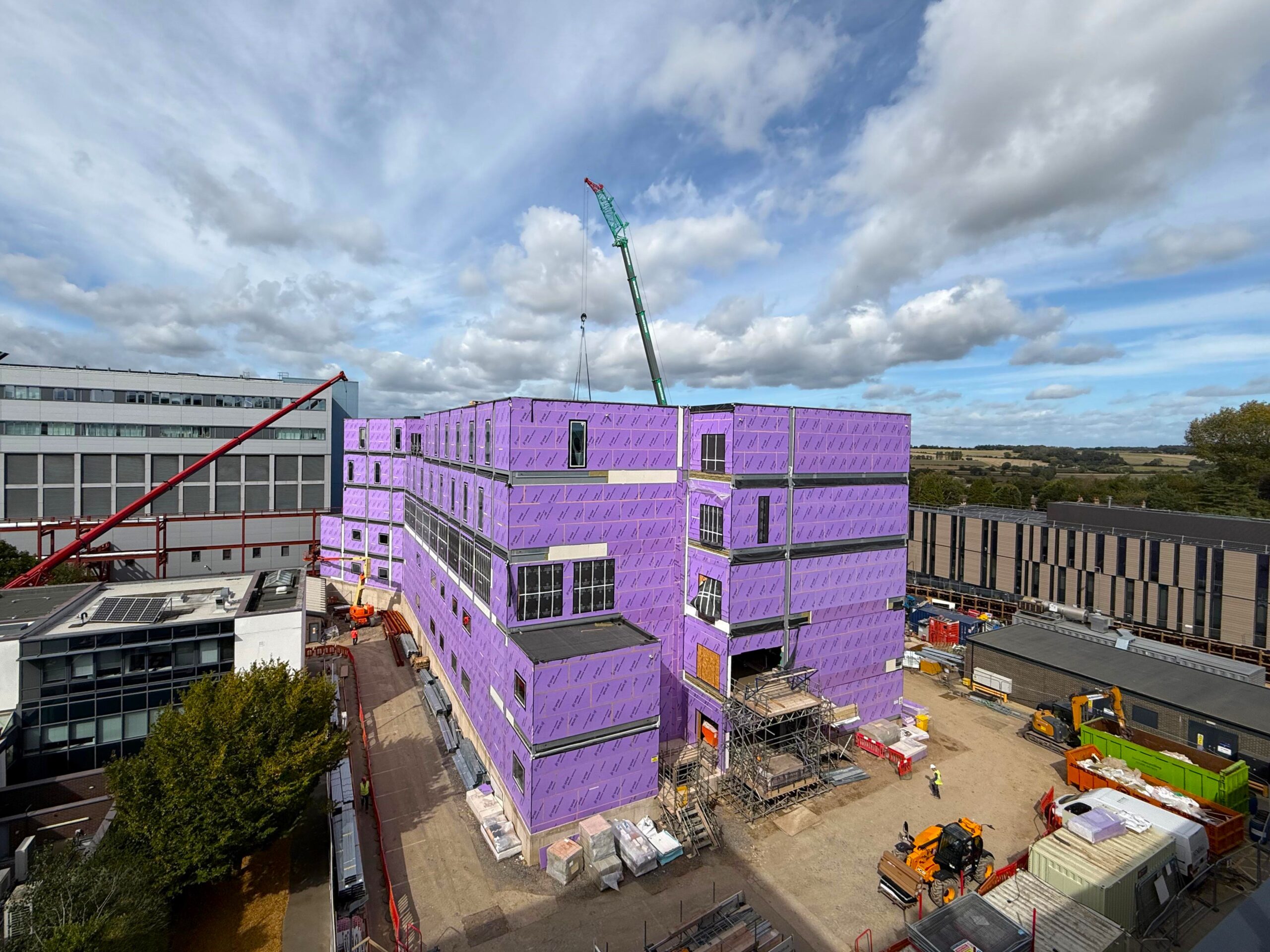
MTX Expands Oxford Surgical Capacity
A major healthcare infrastructure project at the John Radcliffe Hospital in Oxford is moving closer to completion, marking a significant step forward in the expansion of surgical services across the region. The new 5 storey Surgical Elective Centre for Oxford...
Ready for the Heat?
The record-breaking temperatures experienced across the UK during June have reinforced growing concerns about the impact of extreme heat on both construction workers and the built environment. While much of the public focus has centred on soaring temperatures, experts...
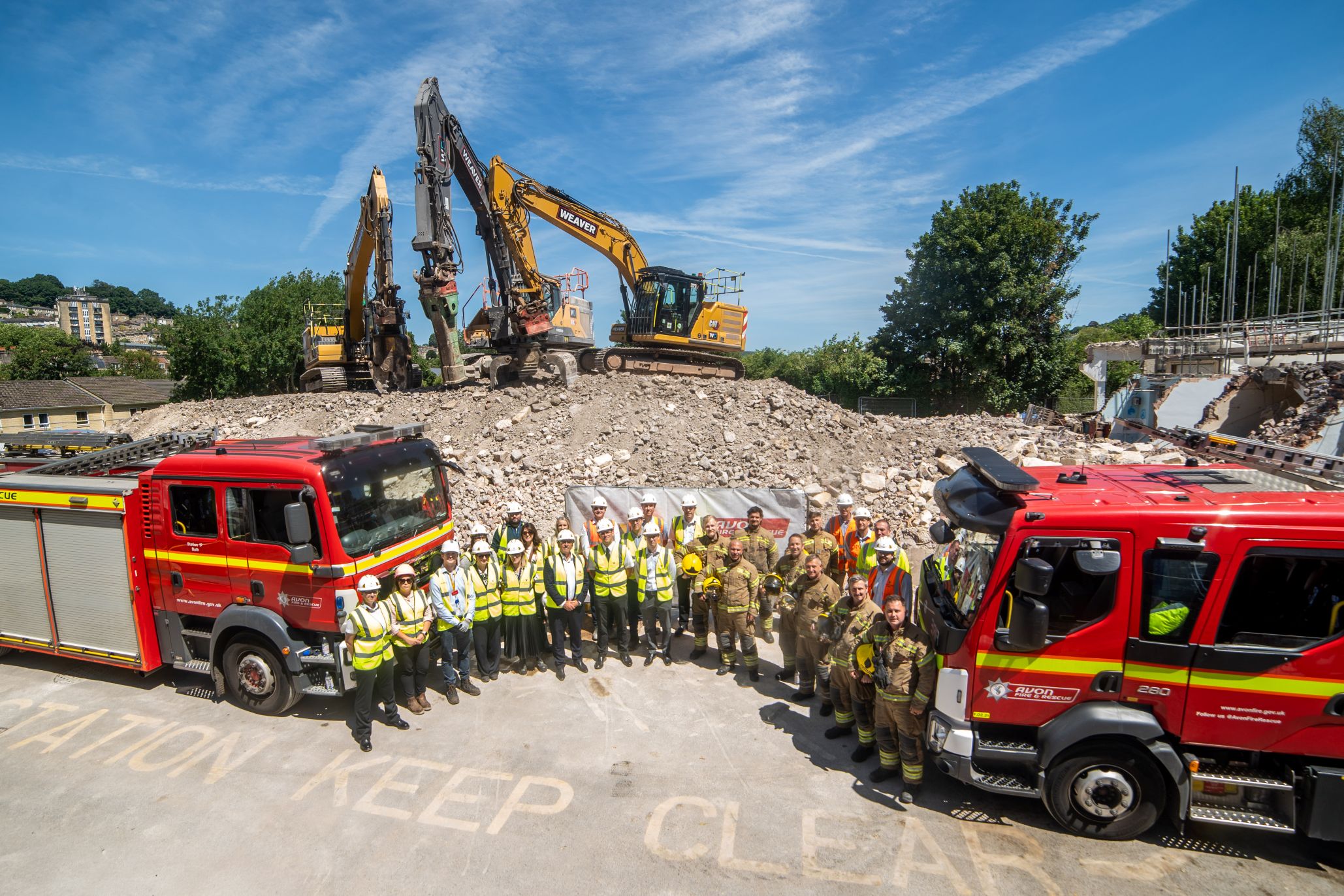
Willmott Dixon lands £16.9m rebuild of Bath Fire Station
Willmott Dixon has secured the £16.9m rebuild of Bath Fire Station for Avon Fire & Rescue Service at the Cleveland Bridge site. Procured through the Southern Construction Framework (SCF), the project will see the demolition of the existing 1938 station and the...