
Rethinking the red zone: How groundworks can squeeze schedules without sacrificing safety
Danny Terry, Regional Sales Manager, at Groundforce Shorco, explores the dangerous paradox of project deadline pressures and explains why replacing red zone vulnerability with mechanised control is the key to deep excavation safety. Between acute labour shortages, rising material costs, and ever shortening delivery deadlines, the pressure on Tier 1 contractors to get projects out […]

Aug 5, 2026
Danny Terry, Regional Sales Manager, at Groundforce Shorco, explores the dangerous paradox of project deadline pressures and explains why replacing red zone vulnerability with mechanised control is the key to deep excavation safety.
Between acute labour shortages, rising material costs, and ever shortening delivery deadlines, the pressure on Tier 1 contractors to get projects out of the ground has never been higher. As a result, groundworks and deep excavations - positioned squarely at the start of the critical path - have become the ultimate pressure point. If pre-construction is delayed, the ground phase is relentlessly squeezed to recover lost time.
This commercial urgency creates a dangerous precedent. In the rush to fast-track excavations, site safety is routinely put under strain. Over the past 18 months, the pressure for contractors to work safer across the UK has rightly intensified, with a particular focus on high-energy hazards and People Plant Interface.
Despite this, when programmes come under pressure, site teams are often expected to work faster with the equipment available. This can lead to extraction tools being used for pitching or general-purpose lifting accessories being relied upon where dedicated solutions would improve safety and efficiency.
For contractors, this critical safety management of interactions between on-foot personnel and heavy mobile machinery or equipment is especially important when it comes to excavations, shoring and piling.
Historically, trenching and shoring have relied heavily on human compliance: groundworkers manually steadying swinging steel sheets, working at height, or pulling release ropes in close proximity to heavy machinery. However, under intense schedule pressures, relying on human behaviour alone to prevent “struck-by” incidents is a failing strategy.
The vulnerability of traditional trenching
According to the Health and Safety Executive (HSE), struck-by incidents involving moving or falling objects remain a prevalent cause of serious injury on UK construction sites. Lifting operations involving heavy components like trench sheets, piling pipes, or hydraulic struts present a particularly high-consequence risk if load control is compromised.
On a live site, load control in traditional trenching is fragile. During installation, control can be instantly lost if a release rope accidentally snags while the excavator slews into position, or if sudden gusts of wind catch a long steel sheet.
Even more volatile is the embedment phase. Traditional pitching shackles must be removed before the machine can apply downward force to the top of the sheet. During that brief window, mechanical control is severed, and stability rests entirely on an operative manually holding the sheet. Speeding up this lift-slew-position-push cycle with traditional equipment creates an environment where human error becomes statistically inevitable.
Breaking the “speed vs safety” cycle
The construction industry has long accepted a deeply ingrained mindset: that safer site methods inherently mean slower progress. Breaking this mentality requires moving beyond basic toolbox talks and examining where time on the critical path is actually wasted.
The true bottlenecks in traditional groundworks are rarely the physical driving times; they are the fragmented tool changes. Stopping the cycle to attach driving caps, working at height to detach shackles, or swapping out extraction clamps consumes valuable hours.
True progress occurs when the industry stops viewing safety and speed as a trade-off, turning instead to mechanised, multi-functional excavator attachments. By integrating pitching, driving, and controlled release into a single system attached to the excavator's quick hitch, a single operator can maintain complete control of the sheet throughout the entire cycle, without constantly swapping equipment or requiring ground personnel to manually steady swinging loads.
Rethinking the red zone
The ultimate goal of modern site design is to drastically reduce red-zone exposure. Real-world site trials with major contractors highlight the transformative impact of this shift.
When contractor JN Bentley approached Groundforce to address site risks, their primary objective was clear: eliminate work at height and drastically reduce time spent in the excavator’s danger zone. Listening to these frontline concerns triggered a fundamental design shift away from traditional spring-loaded release mechanisms, which carry inherent failure risks, toward multi-repeat ratchet systems like SafeRelease that eliminate accidental sheet drops.
Similarly, Seymour Construction reported cutting exclusion-zone personnel from up to four workers down to just one or two during sheet installation. Removing up to 75% of personnel from the immediate hazard zone completely transforms site dynamics. While mechanised tools may not dramatically alter an individual sheet's cycle time, eliminating manual steadying, equipment swaps, and work at height significantly reduces the overall operational window.
Safety and productivity are not opposing forces. By replacing human vulnerability in the red zone with mechanised control, Tier 1 contractors can de-bottleneck the critical path, protect their workforce, and deliver projects on time without compromise.
Sponsored Advert

Related Posts

Watson Batty Architects Celebrates Major Milestone with Strong Performance
Watson Batty Architects is celebrating its 50th anniversary after a strong year-end performance, finishing 19% ahead of target. Despite ongoing economic challenges, the Leeds and Loughborough-based practice ended the financial year with turnover of £3.72 million —...

78-bedroom care home to be built in Yorkshire market town
Specialist business property adviser, Christie & Co, has announced the sale of a development site in Keighley, West Yorkshire, which has planning consent for a 78-bedroom care home. The opportunity presented by the 1.4-acre site was identified by care home...
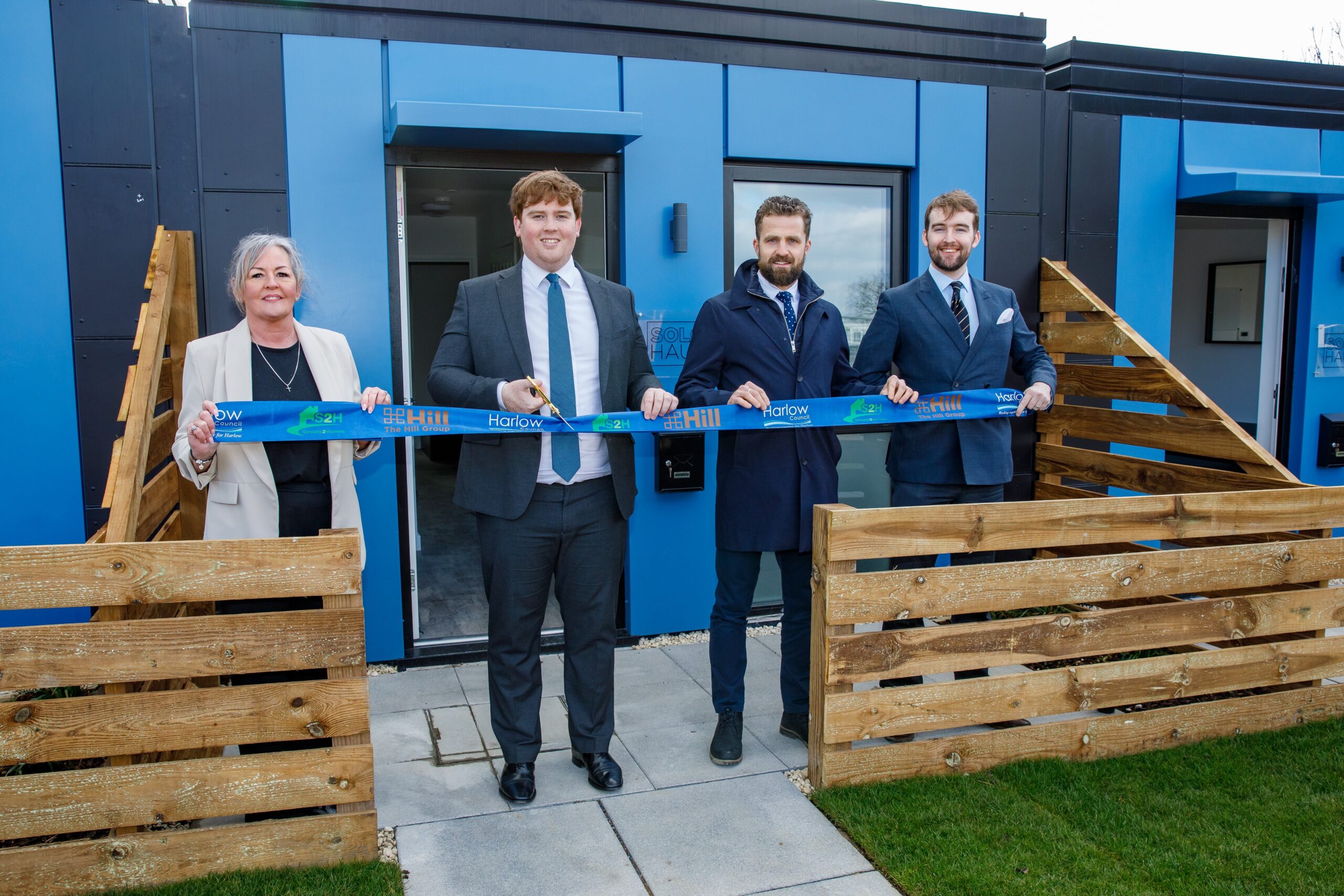
The Hill Group Helps Tackle Homelessness in Harlow, Donating Eight Solohaus Homes
Award-winning five-star housebuilder, The Hill Group, has donated eight beautifully constructed SoloHaus homes to local Harlow charity, Streets2Homes, to help the local homeless community. The single-occupancy modular homes have been donated by Hill in partnership...