
National Grid partner with Met Office to boost capacity on the electricity transmission network
National Grid Electricity Transmission (NGET) has partnered with the Met Office on an innovative weather data project to help expand capacity on the electricity transmission network for wind and solar power. The partnership is aiming to explore the value that can be derived from utilising higher specification weather forecasts to boost capacity on the electricity overhead transmission power lines, allowing more renewable energy to flow. Currently, the electricity transmission system is limited by the individual […]
Oct 4, 2021
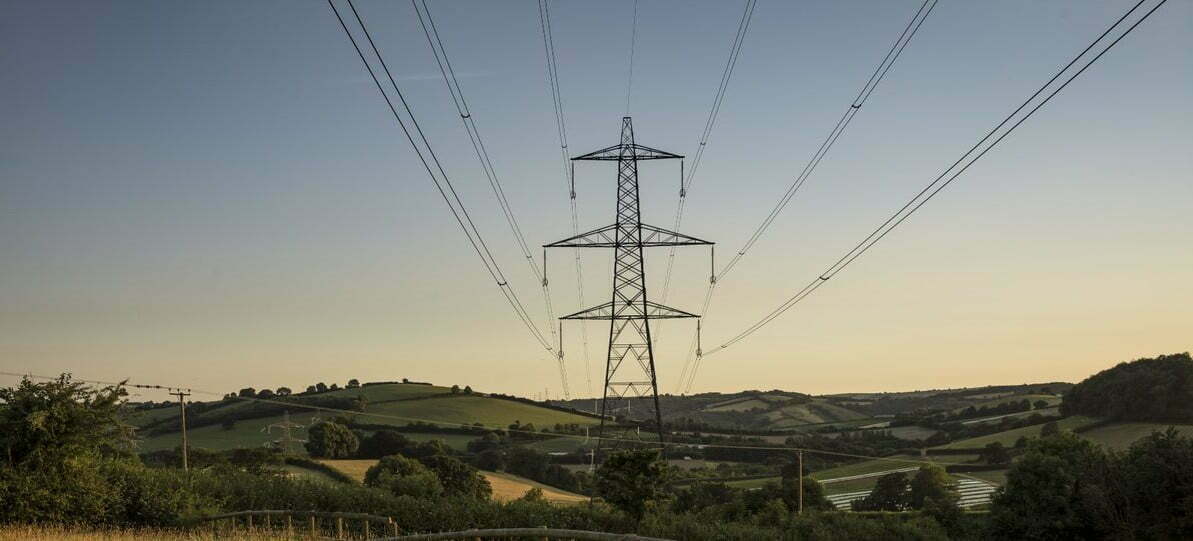
National Grid Electricity Transmission (NGET) has partnered with the Met Office on an innovative weather data project to help expand capacity on the electricity transmission network for wind and solar power.
The partnership is aiming to explore the value that can be derived from utilising higher specification weather forecasts to boost capacity on the electricity overhead transmission power lines, allowing more renewable energy to flow.
Currently, the electricity transmission system is limited by the individual power rating or capacity of the circuits connecting everyone across the country and, with the growth in renewable electricity generation, power flows across the existing grid infrastructure are changing, particularly at peak periods.
Historically, standard assumptions made for weather conditions have been conservative, therefore assets have operated at ratings lower than the actual capacity. To expand capacity, the £545k project, funded through the Ofgem’s Network Innovation Allowance mechanism, looks to utilise significant advances in weather forecasting by assessing the feasibility of integrating a cloud-based weather forecasting service into NGETs present Dynamic line rating (DLR) calculation methodology.
Assessing the DLR and varying the capacity of an overhead transmission power line dynamically, depends on the conductor’s physical properties as well as environmental factors such as wind speed, wind direction, ambient temperature, solar radiation etc. If the environmental conditions are favourable enough to cool the conductors sufficiently, more power can be pushed through the lines, relieving some of the network constraints - helping to meet the country’s energy needs.
Anusha Arva, Innovation Engineer for National Grid Electricity Transmission said: We’ve explored the feasibility of integrating high specification weather forecasting data into our overhead line rating calculation methodology along with starting the initial work towards a demonstrator system. We’re now looking to take the research forward through a subsequent phase of innovation, with the aim to validate this updated methodology against measurements from specific sections of the transmission network, using devices such as local weather stations, and overhead line measurement sensors. The specific sections of the transmission network will be chosen based on a range of scenarios under which Dynamic line rating methodology would need to operate, with focus on sections shaded by dense vegetation and civil structures.”
“With the knowledge and expertise from the Met Office, more accurate and granular weather data can better determine where and when we can boost capacity. Inevitably, this means we can become less reliant on fossil fuel-based generation, avoiding constraint payments to generators when we need to address grid congestion.”
Ian Pearman, Senior Scientist for the Met Office said: “With electricity generation increasingly dependent on the weather, we’re working ever more closely with National Grid. This innovative project has the potential to provide significant improvements in weather forecast accuracy for the energy sector alongside novel approaches to quantifying uncertainty in the forecast. These can be applied to increase confidence in uprating decisions to help achieve the flexibility requirements on the path towards net zero.”
The Dynamic Line Rating project is one part of National Grid Electricity Transmission’s Innovation programme, a series of projects, informed and developed by stakeholders, innovating to address the challenges of the energy transition.
Related Posts

New 66-bed care home to be built in popular Essex town following land sale
Specialist business property adviser, Christie & Co, has announced the sale of a care development site on London Road in Basildon, Essex. The site was identified by the specialist care developer, Aspire-LPP Limited, as having suitability for care usage. The...

Watson transforms derelict Pit Pony Inn site into 22 affordable homes in Wigan
Regeneration specialist Watson has unlocked the redevelopment of the former Pit Pony Inn site in Ashton-in-Makerfield, transforming a long-vacant brownfield site into a sustainable residential development that delivers 22 affordable homes and lasting social value for...

£8.9m upgrade to improve river water quality in South Yorkshire completes
Yorkshire Water has successfully completed an £8.9m investment to upgrade Ingbirchworth and Hoylandswaine wastewater treatment sites in South Yorkshire to improve water quality in both the river Don and Banks Bottom Dike. These improvement works are successfully...