
Housing · Infrastructure · News · Projects · Social Value · Sustainability · Transport
New active travel bridge for Cardiff by Moxon and Arcadis gets go-ahead
Moxon Architects and Arcadis have been granted planning approval for a new pedestrian and cycle bridge across the River Taff in Cardiff. The 165m-long bridge is part of Cardiff Council’s ambitious Channel View Estate regeneration scheme and will improve connectivity and accessibility, encouraging active travel at a local and city-wide scale, while providing a new […]
Jun 10, 2026
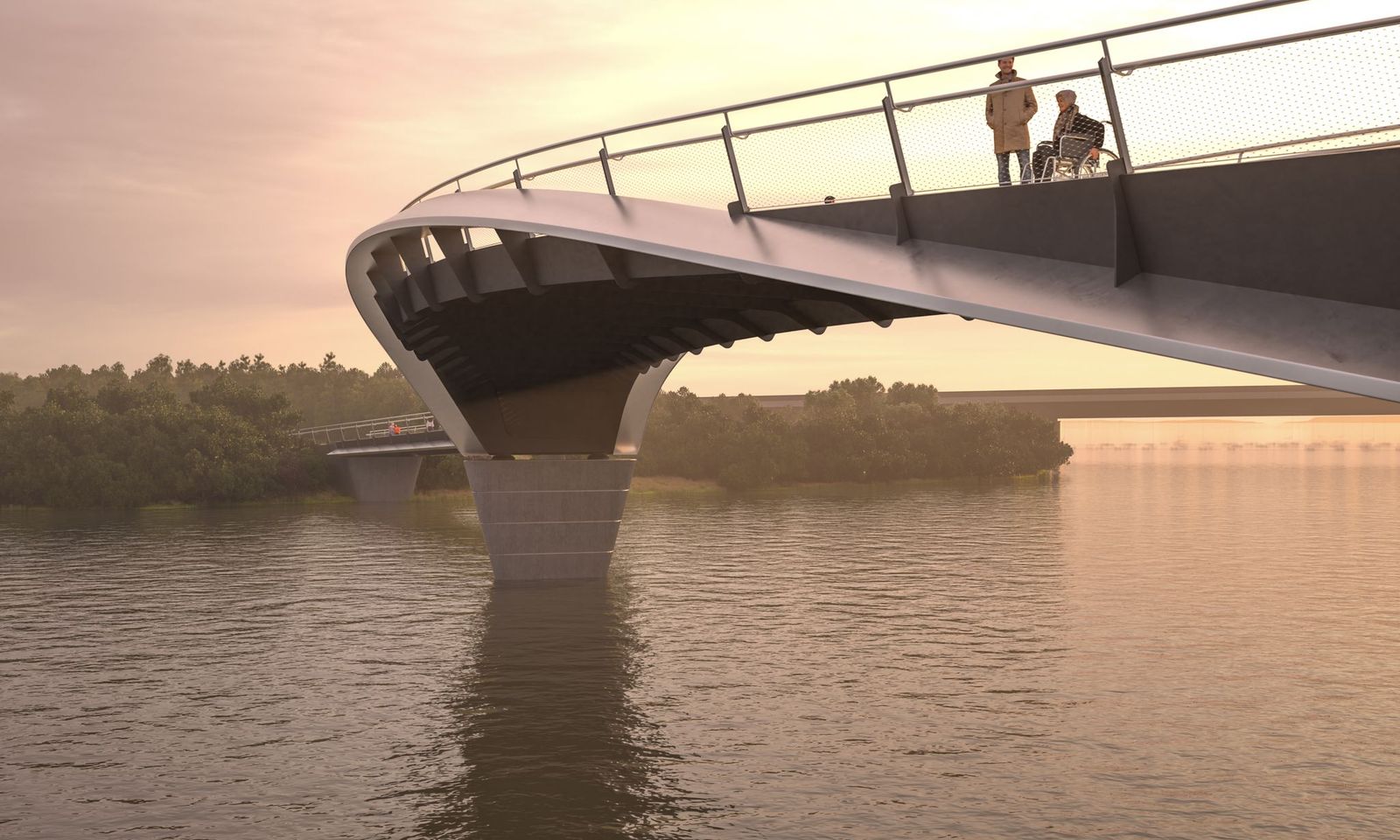
Moxon Architects and Arcadis have been granted planning approval for a new pedestrian and cycle bridge across the River Taff in Cardiff. The 165m-long bridge is part of Cardiff Council’s ambitious Channel View Estate regeneration scheme and will improve connectivity and accessibility, encouraging active travel at a local and city-wide scale, while providing a new leisure destination for the city.
The new crossing will connect surrounding neighbourhoods, Grangetown and Butetown, with locally popular green spaces, The Marl to the west, and Hamadryad Park to the east. It will also serve up to 360 new homes along the western riverbank, better connecting them to the City Centre and Cardiff Bay. By anchoring the bridge within the existing urban fabric, it will help connect communities, providing a safe route between the new housing on the west side with an established Welsh school on the east, benefitting new and existing residents.
Located where the River Taff widens as it approaches Cardiff Bay, the river crossing has been shaped by its proximity to the Louisa Shipwreck, a Scheduled Ancient Monument, and the new Channel View Estate. The 6m wide crossing will comfortably accommodate both pedestrians and cyclists, forming a peaceful and safe connection across the river, and providing a much needed alternative to the major A4232 dual carriageway bridge to the south, and the narrow sidewalks along the Clarence Road bridge to the north.
The bridge’s design reflects the intersection of urban, park, river and coastal environments. With a main span of 60m, the new crossing will be visible from the adjacent green spaces, as an S-shaped path that curves in both plan and elevation. The western bend occurs at the high point over the navigation channel, providing sufficient clearance for river traffic, while the eastern bend creates symmetrical side spans and breaks up the long ramp heading into Hamadryad Park. Within the main span, the structural flange ‘ribbon’ rises from the bottom of the girders over the piers, to the height of the pedestrian balustrade at mid span. This gives users a dynamic experience while providing a sense of enclosure at the highest, most exposed part of the crossing. It also forms a structural arch from which the deck will hang. The pathway widens at this point to incorporate a curving bench to rest and view the river and surrounding landscape.
Connecting paths will be modified to ensure the structure sits above future flood events. At The Marl, landscaped paths will lead users directly onto the bridge, while at Hamadryad Park, approach ramps will integrate into the existing perimeter paths. Gentle gradients, along the approaches and bridge, will allow full accessibility to those with limited mobility.
The use of colour and materials will accentuate the bridge form. A contrasting finish to the flange ‘ribbons’ will stand out against the darker web and exposed ribs supporting the deck. Stainless steel parapets with visually light infill mesh will follow the deck’s curving edges to highlight the bridge's dynamic form. The bridge steelwork will be prefabricated in large sections, and potentially transported to site along the river. The three concrete supports will also feature prefabricated elements. The bridge’s lean and efficient design will minimise local environmental impact and its overall carbon footprint.
Water life, bats and birds using the river corridor have all been considered throughout the design process and biodiverse landscaping at the landings will reinstate any natural habitat lost during construction.
Ezra Groskin, Director at Moxon Architects, said: “It’s been a pleasure helping this project mature in response to Cardiff’s aspirations and the local community’s feedback. Our ambition is to create an elegant local landmark that will provide a vital link for pedestrians and cyclists, connect communities and enhance people’s experience of the river and the surrounding parkland.”
Vita Dudley Bow, Project Lead at Arcadis, said: “This is a really exciting bridge that will deliver a fantastic active travel link in an area of Cardiff that is seeing huge transformation. It’s been great to work with Cardiff Council and Moxon on a project that will bring tangible benefits to the community.”
Councillor Lynda Thorne, Cabinet Member for Housing and Communities at Cardiff Council, said: “The bridge development will create much better connectivity between Butetown and Grangetown for both pedestrians and cyclists, linking into our exciting regeneration of Channel View, creating more good quality, affordable homes in the area.”
Sponsored Advert

Related Posts
Developer shows support for St Austell school
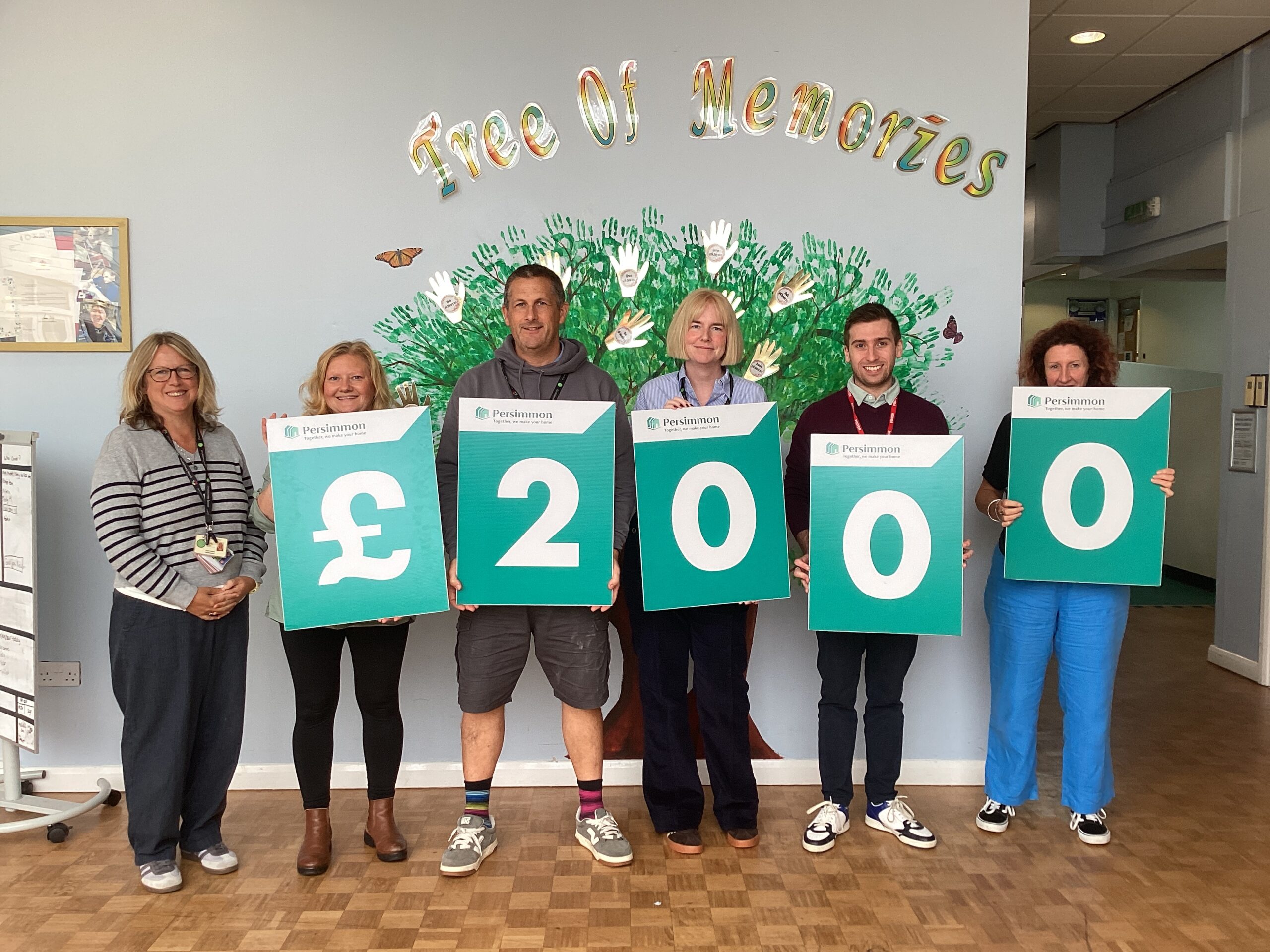
Cornwall’s biggest housebuilder has donated £2,000 to supporters of a special school near St Austell. The donation from Persimmon Homes to Friends of Doubletrees School in St Blazey comes from the developer’s Community Champions programme that sees £700,000 donated to...
City Centre South reaches major milestone as first tower begins to rise
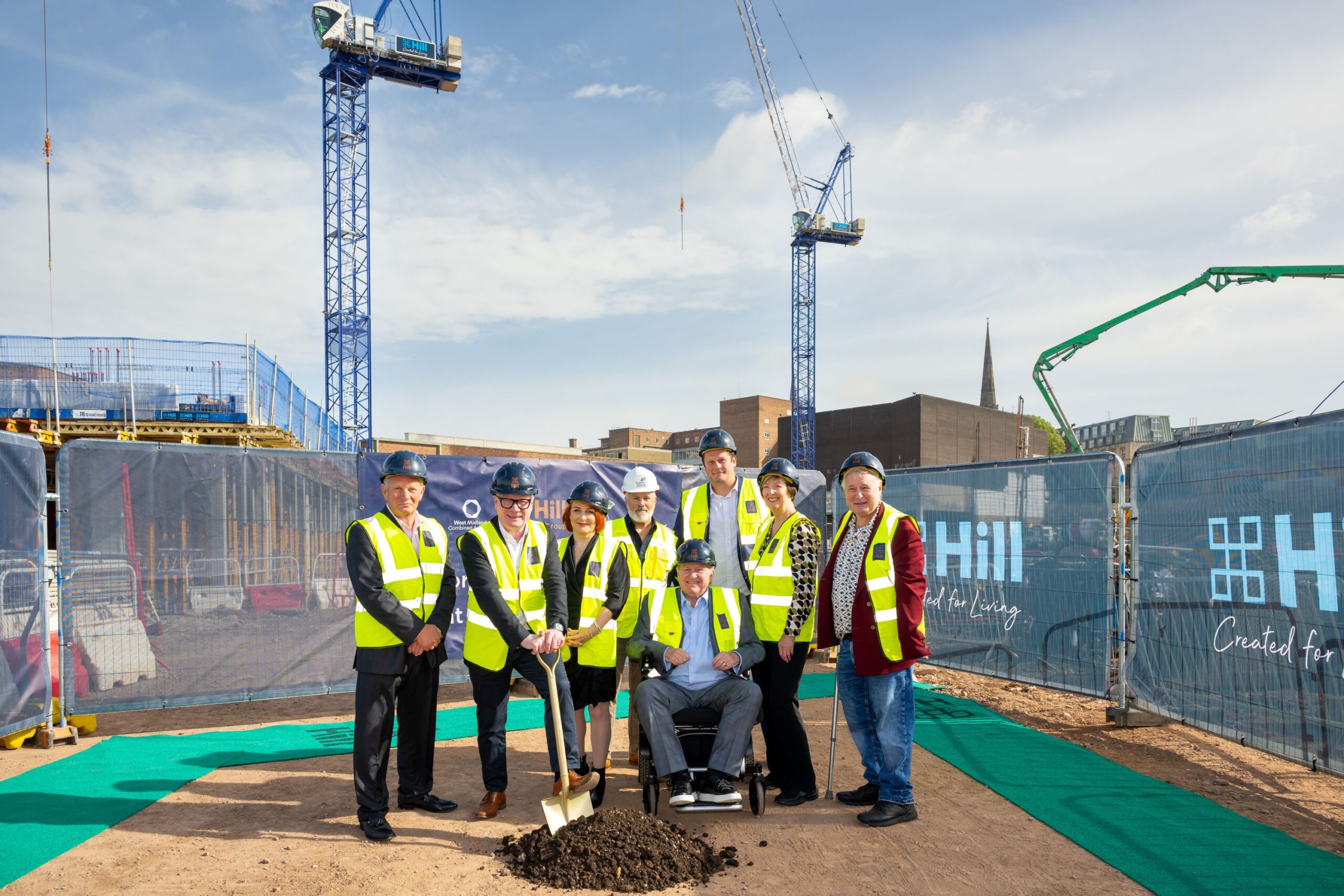
A major milestone has been reached at Coventry's transformational City Centre South regeneration project developed by The Hill Group, with the first tower now rising from the ground following the completion of demolition and extensive groundworks across the site....

New Forest District Council’s strategy puts prevention at the heart of tackling homelessness in the district
New Forest District Council (NFDC) has launched a strategy to prevent homelessness, support people at risk, and help residents find secure accommodation. The Homelessness and Rough Sleeping Strategy sets out NFDC’s priorities for tackling homelessness and...