
Weather Data Must Drive Site Safety
As the construction industry enters 2026, volatile weather continues to influence the safety and reliability of project delivery across the United Kingdom. Storms, prolonged rainfall and sudden temperature shifts have become increasingly frequent, and the sector now recognises that traditional planning based on historical averages is no longer adequate. For health and safety professionals, the […]

Jan 27, 2026
As the construction industry enters 2026, volatile weather continues to influence the safety and reliability of project delivery across the United Kingdom. Storms, prolonged rainfall and sudden temperature shifts have become increasingly frequent, and the sector now recognises that traditional planning based on historical averages is no longer adequate. For health and safety professionals, the relationship between weather and injury risk is becoming clearer through emerging research and practical experience on major projects.
Joe Zdrilich, lead attorney at Zdrilich Injury Law, emphasised how rapidly risks can escalate on site, remarking: “Some of the weather-induced risks commonly experienced on a construction site are slippery platforms, loose soil surfaces because of heavy rains, or intense breeze suddenly striking cranes or higher work-spaces. In workers’ compensation and premises liability cases, my clients frequently tell me how quickly conditions changed, when there was short notice to act. These events prove that weather is not a backdrop but an active force in risk.”
Recent evidence shows that rain has a measurable impact on injury rates. The risk of injuries during work and its association with precipitation, published in Frontiers in Public Health, reported that daily precipitation was a positive predictor of work-related injuries. The authors found that every 10 mm increase in rainfall corresponded to a 1.57% rise in injuries on the same day and a further 1.47% to 1.14% increase over the subsequent three days. They observed that the effect was stronger in winter, when rainfall correlated with a 4.92% increase in work-related injuries. The study also identified certain groups as more vulnerable on rainy days: older workers (2.07% increase), male workers (1.81%) and workers with lower educational levels (2.58%). The likelihood of injuries caused by falls increased by 2.63%, and incidents involving glass products rose by 1.75% during rainfall.
These findings carry particular significance for the construction sector, which is known for its ageing workforce and male dominance, meaning the groups identified as most vulnerable overlap substantially with the typical site demographic. Reflecting on this, Zdrilich noted: “The U.K. construction industry has protocols but greater unpredictability poses threats. An older workforce, in physical roles especially, is at risk of greater injury with cold or slippery surfaces affecting reaction time or movement.”
The study’s authors concluded that precipitation represents a significant risk factor for work-related injury, with adverse effects that may persist for several days and that disproportionately affect specific worker subgroups.
In response to these challenges, construction organisations are increasingly exploring ways to integrate more sophisticated weather intelligence into daily operations. A useful example comes from work undertaken during the construction of the central section of HS2, where teams trialled the use of hyper-local forecasting. The system drew on global weather models, real-time site data and machine learning to develop a tailored 10-day forecast that better reflected the project’s microclimate. Importantly, the value lay not only in the technology but in how the information was used.
Site teams including lifting supervisors, earthworks managers and engineers received clear, operationally relevant forecasts showing when weather could affect safety or productivity. Weekly briefings helped managers anticipate the implications of rain, wind or temperature fluctuations and plan work accordingly. During a severe storm, the site paused operations well before national alerts were issued. By acting early, the project avoided unnecessary risk and minimised disruption.
Zdrilich also highlighted that adaptation is not limited to forecasting systems, explaining: “Real life changes include the use of live weather tools, a designed protocol for rain or wind delays and better drainage on new courses. Wearable safety sensors that track fatigue or surface moisture could help those decisions of when to stop work.”
While individual projects may vary, the overarching message for the construction industry is consistent. Weather should be treated as a predictable and manageable element of risk rather than an unavoidable external force. Localised forecasting, when scaled appropriately, can provide substantial benefits for both safety and programme certainty. Making weather data accessible to operational teams helps ensure that decisions are proactive, evidence-based and aligned with real-time conditions. Incorporating weather awareness into routine planning, safety briefings and commercial discussions supports more realistic expectations and reduces disputes related to weather delays.
Ultimately, Zdrilich argued that proactive risk management is the most powerful safeguard organisations have, stating: “The biggest protection to investment is in PREPARING for climate-related RISKS before anything happens.”
As construction organisations move further into 2026, it is clear that the sector must continue to evolve its approach to weather resilience. Rainfall is likely to remain a major contributor to workplace injury risk, and the research demonstrates that its impact can extend beyond the day it occurs. By adopting improved forecasting tools, strengthening planning practices and protecting groups known to be more vulnerable in adverse weather, the industry can reduce incidents, enhance productivity and build greater confidence into its delivery programmes. The example drawn from HS2 shows what is possible, but the responsibility now lies with the wider sector to embed these lessons across all construction environments.
Written by: Olivia Needham
Sponsored Advert

Related Posts

Connecting Talent and Creating Opportunity: Design & Build UK Joins UK Construction Week Birmingham 2026
Design & Build UK will join UK Construction Week Birmingham 2026 as an official event partner, bringing its industry network and commitment to championing people across construction to the NEC from 29 September to 1 October. At a time when construction is facing...

From Wrexham to Lord’s: Creagh Driving Landmark Stadia Developments
From the resurgence of Wrexham AFC to the continued evolution of the Home of Cricket, Creagh Concrete is playing a key role in shaping some of the UK’s most high-profile stadia developments Its involvement in the redevelopment of the iconic Kop at STōK Cae Ras and the...
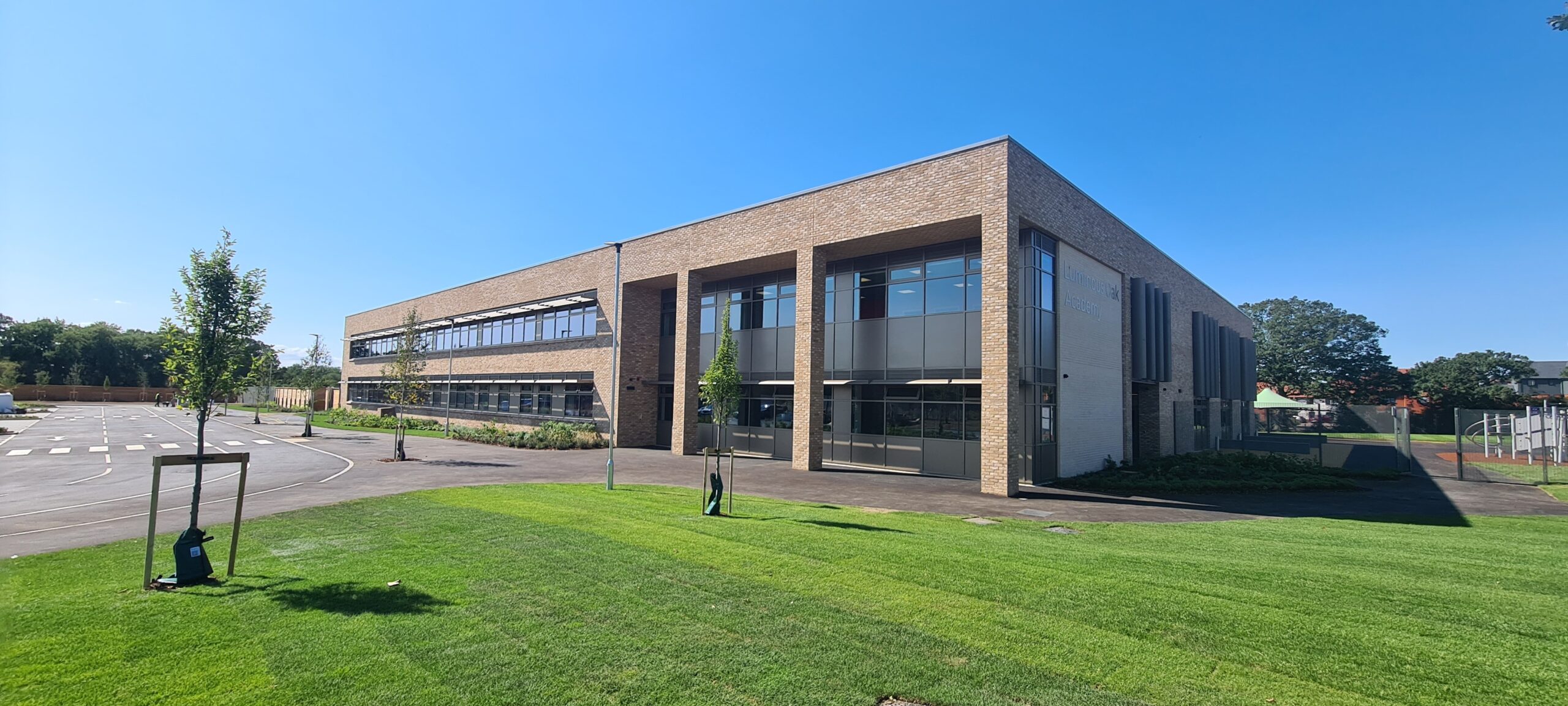
Tilbury Douglas completes construction of Luminous Oak Academy in Hampshire
Tilbury Douglas, a leading UK building, infrastructure, engineering and fit-out business, has completed construction of Luminous Oak Academy in Eastleigh, Hampshire, on behalf of Hampshire County Council and Solent Academies Trust. The school, awarded under the...