
Printing the Future
As the construction industry works towards lower carbon delivery and greater efficiency, 3D printed concrete is beginning to move from experimental research into live infrastructure projects. The technology is now being used on major UK schemes, highlighting how digital manufacturing could reshape the way construction components are produced and installed. One of the latest examples […]
Aug 14, 2026
As the construction industry works towards lower carbon delivery and greater efficiency, 3D printed concrete is beginning to move from experimental research into live infrastructure projects. The technology is now being used on major UK schemes, highlighting how digital manufacturing could reshape the way construction components are produced and installed.
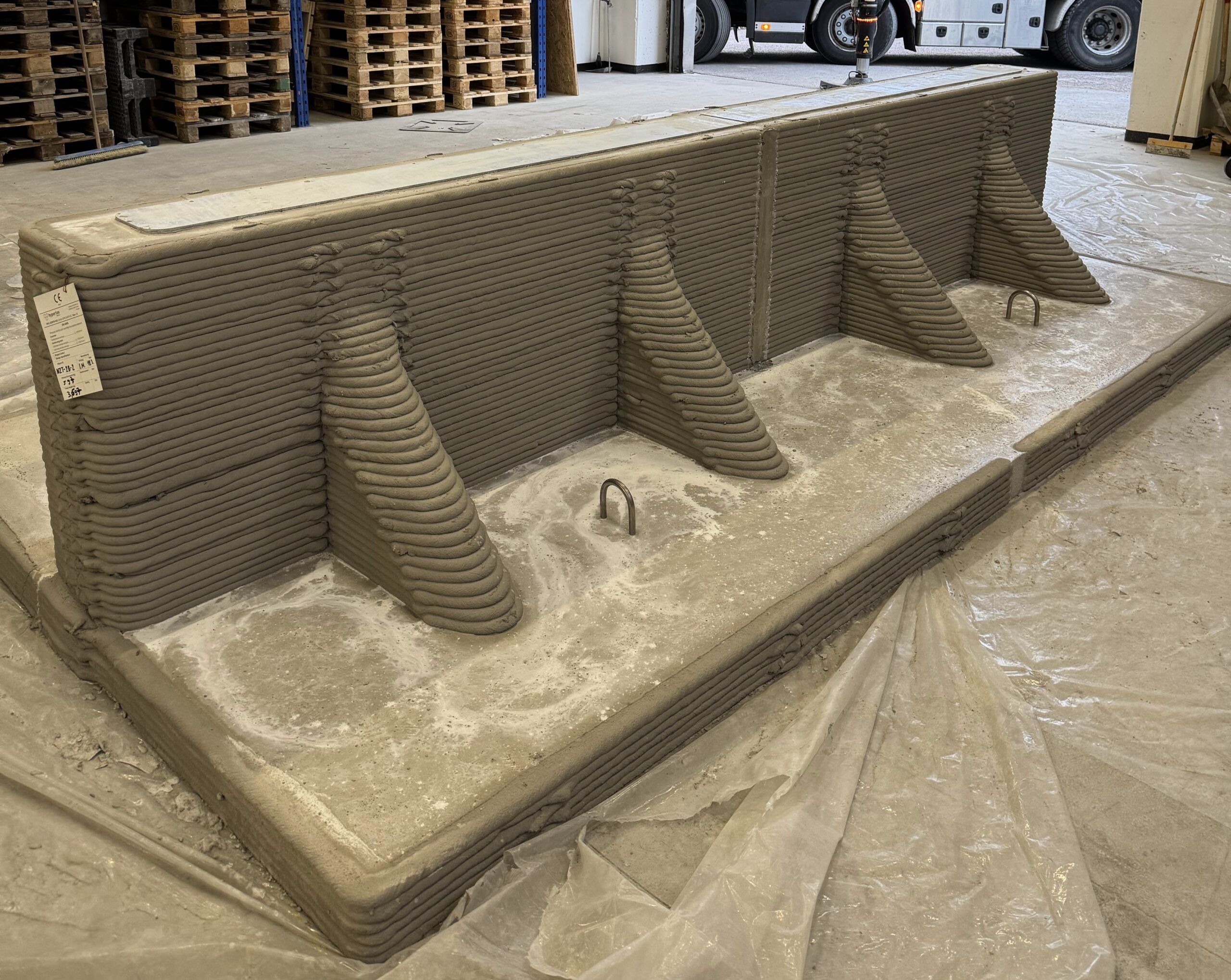
One of the latest examples can be found on Teesside, where Costain and A E Yates have partnered with Hyperion Robotics to deliver approximately 90 3D printed concrete sleepers for the Northern Endurance Partnership’s onshore CO2 gathering system. The project forms part of the East Coast Cluster, which aims to support carbon capture and storage infrastructure across the region.
Hyperion Robotics’ manufacturing process uses robotic 3D printing and digital design technology to create high-strength concrete pipe support bases without traditional formwork. According to project data, the approach reduces concrete and steel use by 40% and lowers carbon emissions by up to 50% when compared with conventional precast methods. The sleepers are also designed to be lighter and stronger than traditional alternatives, helping to speed up installation whilst reducing on-site labour and heavy plant requirements.
Discussing the long-term benefits of the technology, Gemma Small, Sustainable Engineering Discipline Manager at Costain, explained: “The sustainability case for 3D printed concrete is compelling.” Small noted that the process enables concrete to be placed “only where structurally required”, helping to reduce material consumption compared with traditional approaches.
Small also highlighted the practical advantages of the sleepers developed for the project, noting that they are “up to 60% lighter than traditional precast structures”, reducing transport emissions whilst improving health and safety through easier handling on-site.
The project also highlights the growing role of automated manufacturing within construction. By combining engineering, digital modelling and off-site production, contractors are increasingly looking at ways to reduce waste, improve consistency and shorten delivery times. Hyperion Robotics will manufacture the sleepers at its Forge I facility near Scunthorpe, reinforcing the importance of regional advanced manufacturing capabilities within the UK supply chain.
Commenting on the collaboration, Fernando De los Rios, CEO at Hyperion Robotics, noted: “Working alongside Costain, A E Yates and the Northern Endurance Partnership on this project shows what is possible when forward-thinking organisations come together to deliver infrastructure in a different way.”
De los Rios added that the combination of engineering expertise, digital design and automated manufacturing can reduce material use and carbon emissions whilst maintaining high standards of quality and performance.
Looking ahead, Small suggested that additive manufacturing could influence not only how infrastructure is delivered, but also how it is designed. Small observed: “Automated or additive manufacturing not only enables the industry to rethink how assets are delivered, but how they are designed in the first place.”
According to Small, applying advanced manufacturing principles such as repeatability, automation and modularisation can deliver significant sustainability benefits. Small also pointed to the advantages of off-site production, noting that the Teesside sleepers will be manufactured away from site to help speed up delivery and reduce waste whilst maintaining quality and resilience standards.
Summarising the wider significance of the technology, Small concluded: “The real significance of 3D printed concrete is more than its ability to ‘print’ structures. It’s representing a shift from traditional construction methodologies towards a manufacturing-led mindset.”
Whilst 3D printed concrete remains at a relatively early stage of adoption within the UK construction sector, projects such as the Northern Endurance Partnership demonstrate how the technology is moving beyond research and into practical application. As contractors continue seeking ways to reduce carbon emissions, improve productivity and address resource challenges, digital manufacturing methods are likely to play an increasingly important role in the delivery of future infrastructure projects.
Sponsored Advert

Related Posts

Argyll begins £10m transformation of newly acquired 33 Chancery Lane
The renovation of the historic Midtown building will create 52 private offices and a range of new customer amenities, with the first customers moving in from February 2027 Leading London office space provider Argyll has begun its £10m renovation of 33 Chancery Lane,...

Anglian Water’s @one Alliance progresses £1.7m water main reinforcement to support Daventry’s growth
Introduction Daventry, a market town and civil parish in West Northamptonshire, England, is experiencing continued development, with significant housing growth planned across the area. As new developments increase demand on the existing water network, additional...

Glencar appointed to Pagabo’s £4.29bn Civil Engineering, Infrastructure and Enabling Works Framework
Glencar has been appointed to Pagabo’s new £4.29 billion National Framework for Civil Engineering, Infrastructure and Enabling Works 2026, supporting the continued growth of its Civil Engineering & Infrastructure capability across the UK. The four-year framework...