
New Town Lessons Reimagined at Heyford
In issue 18.10 edition of Design and Build UK, our feature “Can We Get New Towns Right This Time?” asked whether Britain has truly learned from the successes and shortcomings of its post-war new towns. The answers were clear: get the placemaking right, engage people properly, and deliver infrastructure early. At Heyford Park in Oxfordshire, […]

Jan 30, 2026
In issue 18.10 edition of Design and Build UK, our feature “Can We Get New Towns Right This Time?” asked whether Britain has truly learned from the successes and shortcomings of its post-war new towns. The answers were clear: get the placemaking right, engage people properly, and deliver infrastructure early. At Heyford Park in Oxfordshire, those lessons are being put into practice. On 1,200 acres of the former RAF Upper Heyford airbase, Dorchester Living is advancing a £5 billion plan for 9,000 homes with schools, shops, workspaces and parks, with around 30% affordable alongside key worker and assisted living homes. The question is whether this can prove that the new wave of towns can avoid the mistakes of the past and feel like real places from the very beginning.
The government has designated Heyford Park as part of its New Towns Programme, a move designed to accelerate delivery and attract investment in infrastructure. Ministers have tied the programme to the national target of 1.5 million new homes within this Parliament, calling for thriving, sustainable communities rather than bolt-on housing estates. That aligns with the Royal Town Planning Institute’s view that leadership, design quality and connectivity are the true markers of success. Victoria Hills, chief executive of the RTPI, said: “Britain’s first new towns changed lives, but they also locked in outdated ideas.” The challenge now is to keep the ambition and lose the inflexibility.
Heyford Park’s early phases show what an infrastructure-first approach looks like. Around 1,200 homes are already occupied, and residents can shop, eat out and take children to school on site. Further phases will bring new schools, a healthcare hub, sports facilities and community services that arrive in step with housing. Transport is being planned in advance rather than as an afterthought, with upgrades proposed for Heyford railway station on the Cherwell Valley Line, new bus links, and a network of cycleways and footpaths connecting neighbourhoods to centres and green spaces. The goal is simple: the town should function as a town when people arrive, not years later.
The design team, led by Proctor and Matthews Architects, has drawn heavily on the site’s heritage. The airbase’s main runway will become Runway Park, a kilometre-long green spine for walking, cycling and community events. Former bunkers and hangars are being reused as cafés, studios and workshops, adding character while preserving local history. More than 65,000 trees are planned, and over 60% of the land will be dedicated to green and blue infrastructure, with meadows, orchards, lakes and sustainable drainage woven through each neighbourhood.
Paul Silver, chief executive of Dorchester Living, explained that the housing mix is designed to support residents “at every life stage rather than a single demographic.” The current application includes 2,700 affordable homes, 180 key worker homes and 900 assisted living properties. Employment space is being created from the start, alongside a Green Technology Quarter for clean-tech and creative industries. Silver added: “Our goal is to deliver something exceptional and exemplar for Oxfordshire, a national blueprint for how towns can and should be delivered in the UK.”
Earlier new towns such as Stevenage and Crawley met urgent housing needs but often left residents waiting for schools and centres. Milton Keynes corrected many of those issues but became defined by car dependency. The new generation is learning from both with adaptable masterplans, walkable layouts and reliable public transport planned from the outset. Strong design codes aim to ensure variety without chaos, creating distinctive places that can evolve rather than age.
Delivery, however, remains the greatest test. Building entire towns at pace will stretch the labour market and supply chains. Rising costs, limited materials and planning delays all threaten progress. Frank Pennal, chief executive of Close Brothers Property Finance, warned: “The combined challenge of labour and material shortages, rising costs and planning delays are a serious risk to the delivery of new homes across the UK.” For Heyford Park, that means sustaining build rates over many years while keeping quality high and phasing growth carefully.
Sustainability is where Heyford Park aims to set a new benchmark. The masterplan seeks to make it the UK’s first energy-surplus town, producing more renewable power on site than it consumes. Solar arrays, wind generation and smart grids will underpin a low-carbon network, while every home will be highly efficient and electric ready.
Public perception will ultimately determine whether the term “new town” can be rehabilitated. The RTPI survey shows how persistent the old clichés remain, such as concrete, cars and characterless estates. The only way to overturn that image is to deliver places that feel alive early, with centres that open on time, schools ready for the first pupils, and parks that people use from the start. If that vision holds, Heyford Park could stand as the example that restores confidence in the idea of new towns, showing that the ambition of the post-war era can be reimagined for today, with community, climate and long-term value at its heart.
Written by: Lee-John Ryan
Sponsored Advert

Related Posts

Developer shows support for St Austell school
Cornwall’s biggest housebuilder has donated £2,000 to supporters of a special school near St Austell. The donation from Persimmon Homes to Friends of Doubletrees School in St Blazey comes from the developer’s Community Champions programme that sees £700,000 donated to...
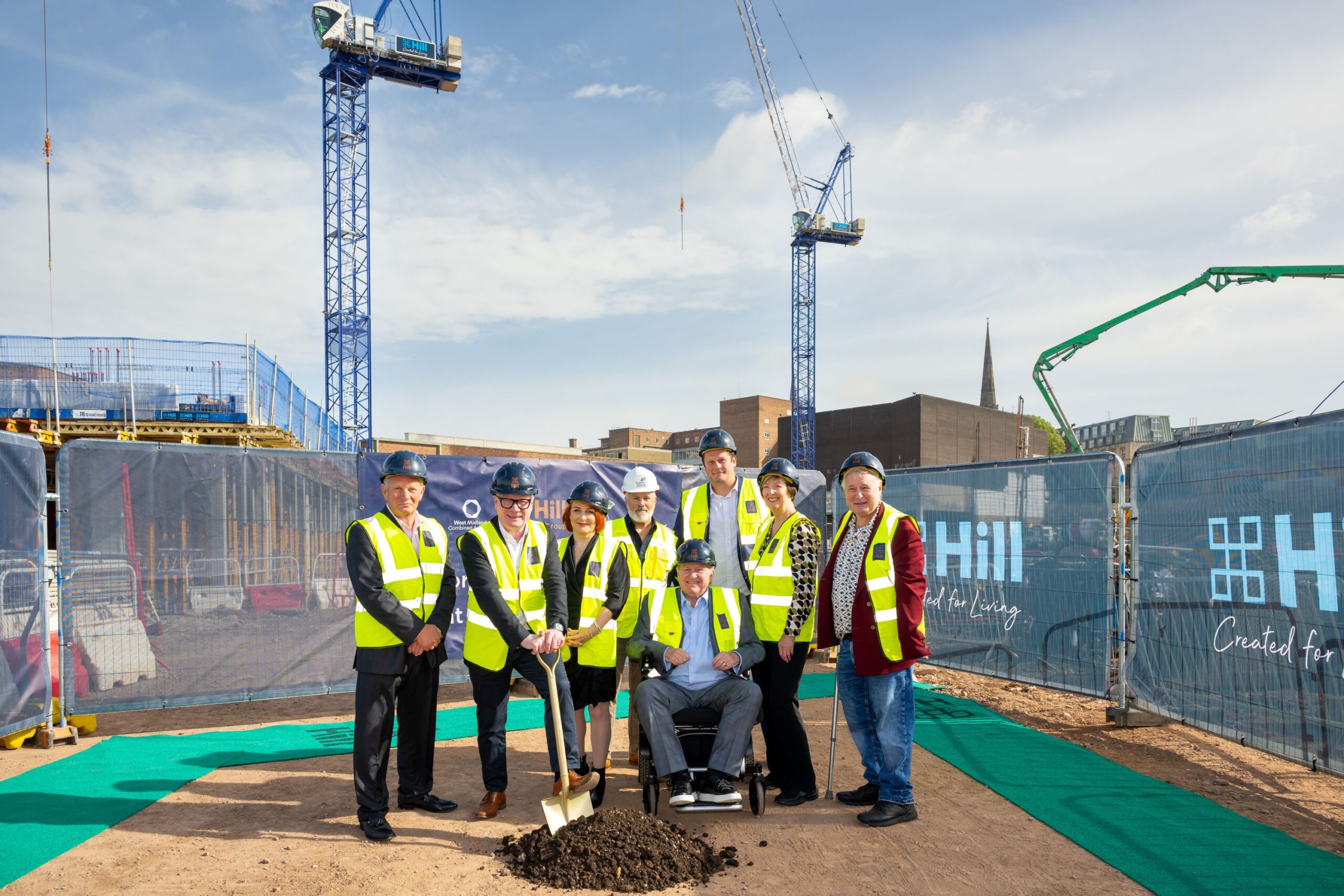
City Centre South reaches major milestone as first tower begins to rise
A major milestone has been reached at Coventry's transformational City Centre South regeneration project developed by The Hill Group, with the first tower now rising from the ground following the completion of demolition and extensive groundworks across the site....

New Forest District Council’s strategy puts prevention at the heart of tackling homelessness in the district
New Forest District Council (NFDC) has launched a strategy to prevent homelessness, support people at risk, and help residents find secure accommodation. The Homelessness and Rough Sleeping Strategy sets out NFDC’s priorities for tackling homelessness and...