
Heightened Hysteria for Selling and Buying Homes Within Tall Apartment Buildings
There has been a significant rise in rhetoric regarding selling and buying property within taller apartment buildings, due to the Building Safety Act not coming into place sooner, reports national law firm Dutton Gregory. A high-risk tall building is classed as one that is 18 metres or more in height, or seven or more storeys, […]

Aug 4, 2023
There has been a significant rise in rhetoric regarding selling and buying property within taller apartment buildings, due to the Building Safety Act not coming into place sooner, reports national law firm Dutton Gregory.
A high-risk tall building is classed as one that is 18 metres or more in height, or seven or more storeys, excluding basements and roof features. The latest regulation came into effect earlier this year and requires all existing occupied high-risk buildings to be registered from 6 April 2023 and no later than 1 October 2023. It’s estimated that this will apply to around 12,500 buildings across the country. The majority of these buildings are within Greater London, but other major cities such as Birmingham, Manchester and Liverpool, also have prominent clusters of tall residential towers. The risk of not being registered will mean that it will be classed as an offence if the building is occupied.
This is in addition to the issue that is causing the real problems in the conveyancing process, being the provisions set out in the Building Safety Act, and with regards to buildings which are more than 11 metres in height, or more than five storeys. Previously, if works had taken place to a building which were defective, then a claim could be brought against those who did the work up to six years from when the works took place. The Building Safety Act 2022 which was passed through Parliament on 26 April 2022, provides a 30-year limitation period for works carried out before the Act. After the Act, the limitation period will be 15-years.
With multi-occupied buildings that are more than 11 metres, or more than five storeys, it is expected that the developer is liable for any payments, and if they cannot be found, the onus falls on the leaseholders. However, if the protections afforded by the Building Safety Act apply, there is a cap on figures to be paid for safety work on a property that is 11 metres, or five storeys in height of £10,000 (£15,000 in London) in any 10-year period. If between £1m to £2m, that becomes £50,000, and if over £2m it is £100,000. The developer and leaseholder will not be charged if the flat is valued below £175,000 (£325000 in London).
The question therefore, is does the property have the protection of the provisions of the Building Safety Act?
Paul Sams, Partner and Head of Property at Dutton Gregory Solicitors, said: “With the recent timings of the new regulations, this can present questions and uncertainty for lenders, leaseholders, freeholders, and prospective buyers. Dutton Gregory has the expertise and experience to take on new transactions for apartments in taller buildings that are affected by the Building Safety Act, whereas other lawyers are turning down the work because of the perceived risk factors involved.
“The current housing market landscape is already tricky to navigate, and if there are further delays in selling apartments in these taller buildings, we could experience unprecedented housing issues in some of our biggest cities. The demand for housing will be further exacerbated and high-quality apartments risk lying empty, which are ideal for renters and first time buyers.
“Our national conveyancing team knows the questions to ask and understands the risks, so the number of taller building transactions we are currently undertaking is at a record high. We are very willing to advise new sellers and buyers on taller building considerations, in order to help limit delays. People need solutions to problems, not just the problems that they already know about to be regurgitated to them.” Dutton Gregory Solicitors is headquartered in Hampshire and is a full-service legal firm for private and corporate clients. The multi-award-winning practice has offices in Bournemouth, Chandler’s Ford, Liverpool, London, Poole, Winchester, and Woking.
Sponsored Advert

Related Posts

Connecting Talent and Creating Opportunity: Design & Build UK Joins UK Construction Week Birmingham 2026
Design & Build UK will join UK Construction Week Birmingham 2026 as an official event partner, bringing its industry network and commitment to championing people across construction to the NEC from 29 September to 1 October. At a time when construction is facing...

From Wrexham to Lord’s: Creagh Driving Landmark Stadia Developments
From the resurgence of Wrexham AFC to the continued evolution of the Home of Cricket, Creagh Concrete is playing a key role in shaping some of the UK’s most high-profile stadia developments Its involvement in the redevelopment of the iconic Kop at STōK Cae Ras and the...
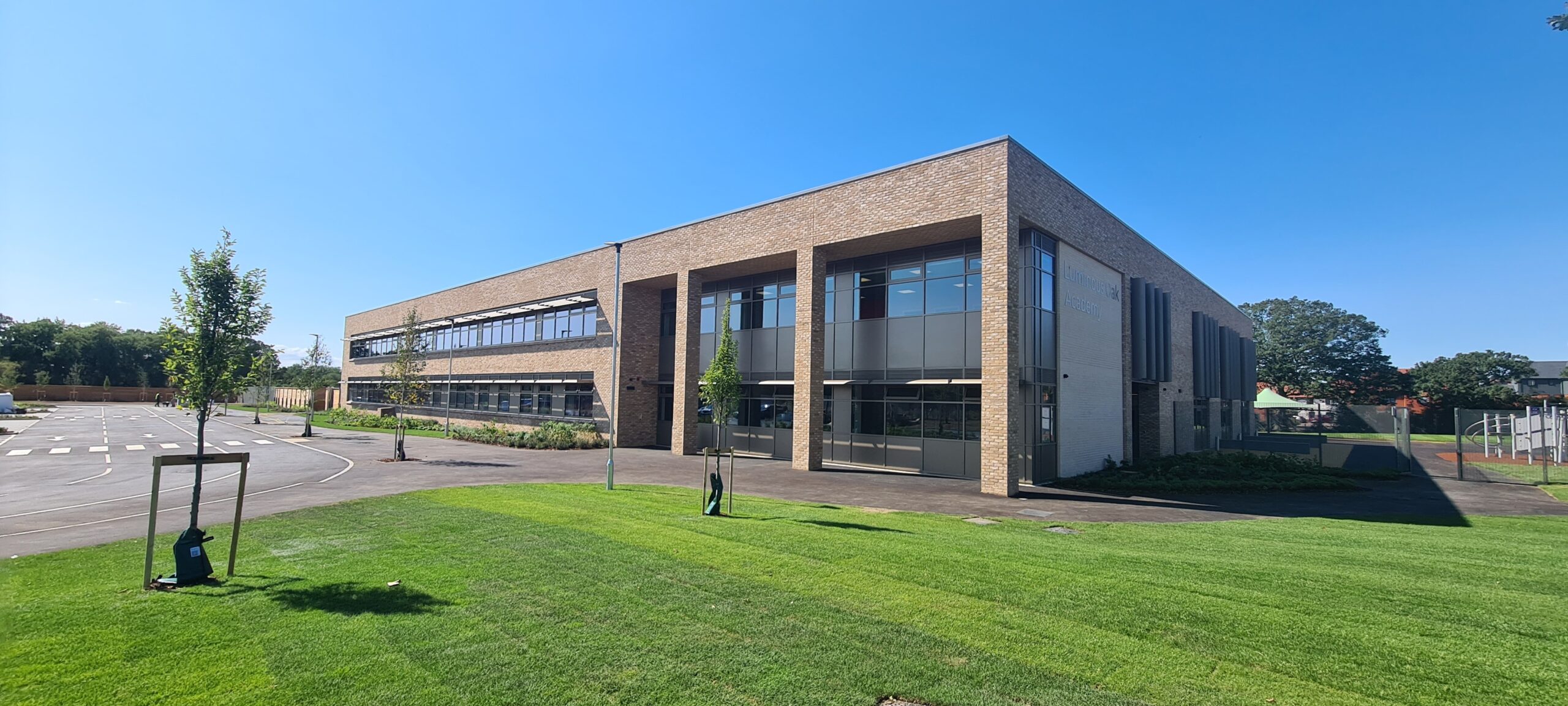
Tilbury Douglas completes construction of Luminous Oak Academy in Hampshire
Tilbury Douglas, a leading UK building, infrastructure, engineering and fit-out business, has completed construction of Luminous Oak Academy in Eastleigh, Hampshire, on behalf of Hampshire County Council and Solent Academies Trust. The school, awarded under the...