
Flooding – Can We Ease The Pressure?
Much of the UK is currently experiencing heavy rainfall after an exceptionally dry summer. With heavy rain becoming more prevalent and authorities under pressure to build more homes, how do developers make building on floodplains less of an issue? What can developers do to ease the pressure and start to address the flooding risks over […]
Oct 28, 2022
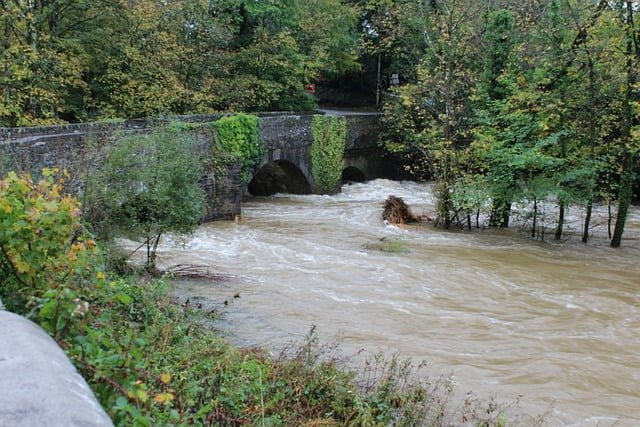
Much of the UK is currently experiencing heavy rainfall after an exceptionally dry summer. With heavy rain becoming more prevalent and authorities under pressure to build more homes, how do developers make building on floodplains less of an issue? What can developers do to ease the pressure and start to address the flooding risks over five million homeowners face? Here Raj Somal, Director at the sustainable engineering consultancy, Dice, explores the issue.
Heavy rains and the subsequent flooding that comes with them are becoming more common. In the last decade (2009 - 2018), figures from the Met Office have shown it’s been around one per cent wetter than 1981 - 2010 and five per cent wetter that 1961 - 1990.
According to figures from the Environment Agency over 5.2 million homes and properties in England are at risk from flooding and coastal erosion. These numbers will have risen with 5,000 new homes being approved for construction on flood plains in 2021.
With the UK currently experiencing heavy rainfall and the threat of flooding, you can see the problems being caused, and the potential problems that will be caused in the future.
A floodplain is an area of land (generally flat) adjacent to a river or a small watercourse. This area is a continuation of the river channel which is allowed to flood when the river overflows.
When constructing within the floodplain, the area that is allowed to flood decreases. This means that when the same amount of water enters that now-smaller area, the water gets displaced and increases the risk of flooding elsewhere
Similarly, when building within Flood Zones 2, 3a and 3b, the kind of development that is allowed to be built is determined based on the vulnerability of the infrastructure versus the risk level of the flood zone.
However, generally, when proposing to build within these flood zones, you must prove that you are not increasing the flood risk elsewhere. This is done by undertaking flood modelling and providing flood compensation in some cases.
The balance comes from having to consider the pressing demand for new homes as a result of the well-documented housing shortage, and the potential risk to whole communities if these are constructed on a floodplain.
To decrease the impact of a development in terms of flood risk, current regulations state that sustainable drainage needs to be incorporated within the proposals. This can be anything from attenuation ponds and permeable paving to filter drains, swales, or storage tanks.
Essentially, sustainable drainage provides surface water storage on site as well as water quality improvement and biodiversity benefits.
Attenuation is simply the storing of excess water on site, prior to discharging at a lower rate to a suitable drainage outfall. The new rate can either be based on greenfield run-off rates (which is the rate at which the water would have drained if the site were open greenfield), or decreased brownfield rate (which is the discharge rate that is being generated from the existing impermeable areas being positively drained on site including a betterment).
This is to ensure that the rates being proposed to leave the site are lower than the current rates, therefore ensuring reduced flood risk downstream.
With regards to properties already built on floodplains, the options are limited when it comes to keeping excess water away from the home.
Homeowners can introduce physical barriers such as a blockwork/masonry wall or a flood defence around the home, like a flood barrier or water gate, which reduces the potential risk of water entering the property.
Generally speaking, the risk of flooding will still remain if located within a floodplain though, so damage mitigation measures are important. This can include carefully choosing materials for inside the home (certain flooring options, for example, will be less susceptible to water damage than others) or placing electrical sockets higher off the ground.
The onus is now on developers and planners to ensure sustainable drainage is in place and for innovators in construction to look at new ways to relieve the pressure.
At the same time, support must be offered to those living in areas at high risk from flooding and we must prepare for the challenges ahead.
Related Posts

Translink Drives Transport Transformation
For decades, public transport infrastructure in Northern Ireland has faced many of the same pressures affecting networks across the UK, including ageing assets, rising passenger expectations and growing demand for more sustainable travel. Today, however, the...

Ice Bowl Redevelopment Moves into Phase Two
The redevelopment of Dundonald International Ice Bowl has entered a significant new stage, with construction activity now progressing on one of Northern Ireland’s largest leisure infrastructure projects. Owned and operated by Lisburn & Castlereagh...

Balfour Beatty invests £10 million in Pi Labs to accelerate practical innovation in infrastructure delivery
Balfour Beatty, the international infrastructure group, today announces a £10 million strategic investment in Pi Labs’ Fund IV, an early-stage venture capital fund and platform focused on technologies transforming the built environment. The investment will strengthen...