
Cutting Dust Risks
The National Federation of Roofing Contractors (NFRC) has launched a major new awareness campaign aimed at tackling one of the construction industry’s most serious long-term health risks, respirable crystalline silica dust. The federation’s new “Cut the Dust” initiative is designed to improve understanding of silica exposure across the roofing sector whilst encouraging safer working practices on […]
Aug 14, 2026
The National Federation of Roofing Contractors (NFRC) has launched a major new awareness campaign aimed at tackling one of the construction industry’s most serious long-term health risks, respirable crystalline silica dust. The federation’s new “Cut the Dust” initiative is designed to improve understanding of silica exposure across the roofing sector whilst encouraging safer working practices on sites across the UK. The campaign comes amid growing concern surrounding occupational lung disease and the long-term health impacts, associated with dust generated during common construction activities.
Silica dust is produced when materials including concrete, mortar, tiles, sandstone and bricks are cut, drilled or ground. Within the roofing sector, many routine tasks can release harmful airborne particles capable of causing irreversible lung damage when inhaled repeatedly over time. Research from the Health and Safety Executive indicates that exposure to respirable crystalline silica remains one of the most significant workplace health risks within the UK construction sector, contributing to illnesses including silicosis, chronic obstructive pulmonary disease and lung cancer.
NFRC explained that the campaign has been introduced to raise awareness of the issue whilst helping roofing businesses better understand practical control measures that can significantly reduce risks to operatives. Founded in 1892, NFRC is the UK’s largest roofing trade association, representing more than 1,200 roofing contractors and suppliers nationwide. The organisation continues to play an important role in supporting technical standards, training, safety and compliance throughout the roofing industry. The federation has placed increasing emphasis on occupational health in recent years, reflecting broader efforts across the construction sector to improve workforce welfare standards and reduce long-term illness.
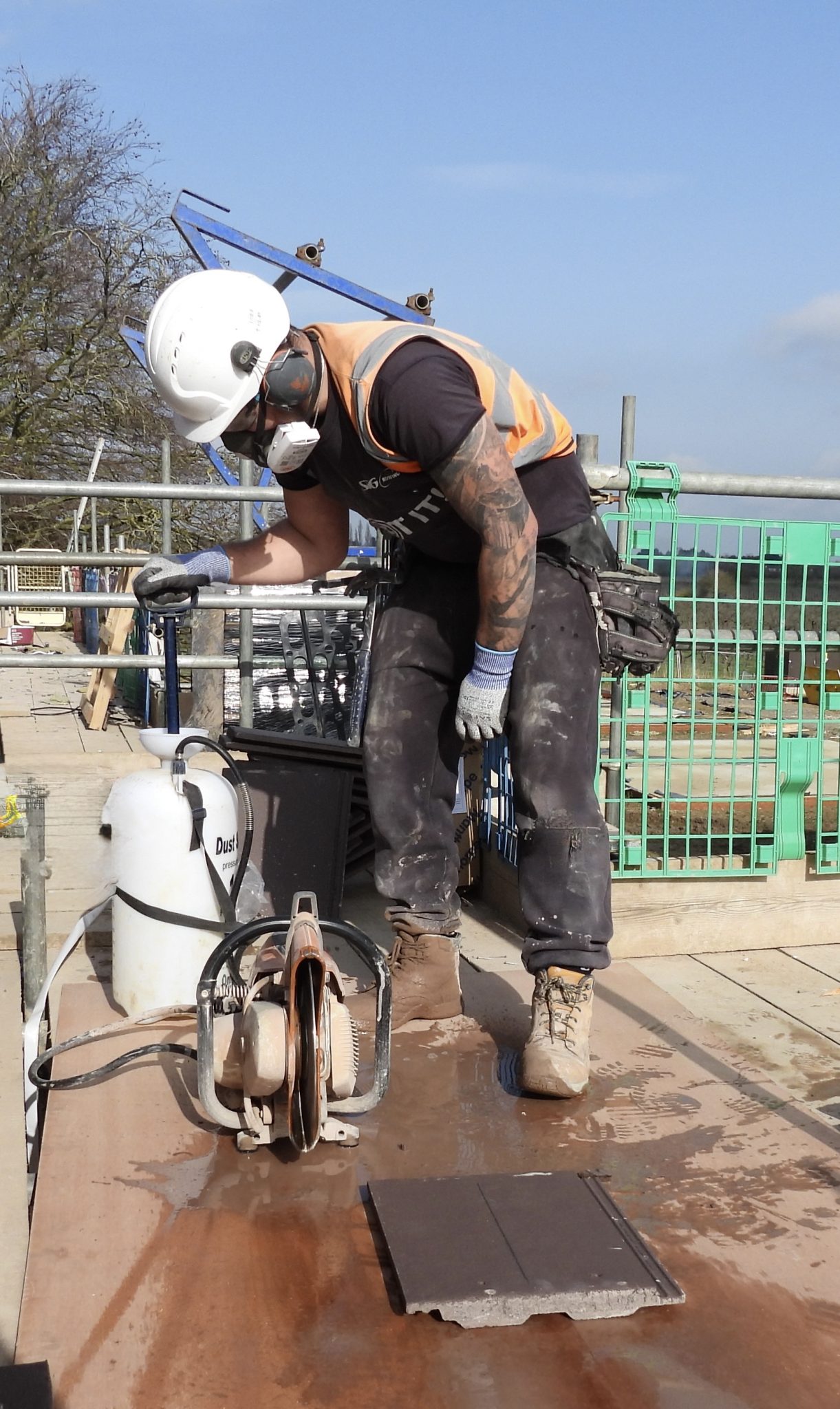
The “Cut the Dust” campaign highlights preventative measures including wet cutting systems, on-tool extraction, improved ventilation, respiratory protective equipment and workforce training. It also encourages businesses to review working methods and strengthen awareness amongst operatives and subcontractors. Importantly, the initiative moves attention beyond immediate site hazards and towards the less visible health impacts that can develop after years of repeated exposure. Construction has traditionally focused heavily on accident prevention and physical safety. However, occupational illness remains one of the sector’s most persistent challenges. Data from the Health and Safety Executive continues to show that significantly more construction workers die from work-related diseases than from on-site accidents each year.
Guidance provided by the Health and Safety Executive reinforces the importance of effective control measures to help prevent long-term occupational illness associated with respirable crystalline silica. The guidance highlights the need for appropriate planning, equipment and working practices to reduce exposure risks across construction activities.
For roofing contractors, where cutting and grinding activities are common across many systems and materials, improving dust control is becoming increasingly important from both a compliance and workforce welfare perspective. The campaign also aligns with wider industry changes linked to the Building Safety Act and growing expectations surrounding competence, training and safe systems of work. Amongst the companies operating within this evolving environment is SEI Roofing, which continues to deliver roofing services across commercial, industrial and specialist sectors whilst maintaining a strong emphasis on safety and quality standards.
The business has built its reputation around delivering complete roofing solutions tailored to client requirements across refurbishment, maintenance and new-build projects. SEI Roofing operates across a broad range of roofing disciplines and continues to support both public and private sector developments. The company also highlights its commitment to professional delivery, trained operatives and high-quality workmanship, reflecting the increasing importance clients are placing on competency and compliance throughout the supply chain. This wider shift in expectations is helping place occupational health more firmly alongside traditional site safety priorities. Roofing contractors are now being asked not only to prevent accidents, but also to demonstrate that long-term health risks are being actively managed through planning, equipment selection and workforce education.
Technology and product innovation are also beginning to play a larger role in improving health outcomes across the industry. Modern dust suppression systems, improved extraction equipment and more advanced respiratory protection are helping businesses reduce exposure levels while maintaining productivity on site. At the same time, awareness campaigns such as NFRC’s are encouraging cultural change within the sector. Historically, dust exposure has sometimes been underestimated because its effects are not immediately visible. However, the industry is increasingly recognising that repeated low-level exposure over many years can have devastating consequences for workers later in life.
NFRC believes that improving awareness now could help reduce future occupational illness across the roofing workforce. Education, supervision and consistent site practices are expected to remain central themes as the campaign develops further. For contractors across the roofing sector, the message is becoming increasingly difficult to ignore. Managing dust exposure is no longer simply a secondary health issue or compliance exercise, it is rapidly becoming a core part of responsible construction delivery and long-term workforce protection.
Sponsored Advert

Related Posts

Argyll begins £10m transformation of newly acquired 33 Chancery Lane
The renovation of the historic Midtown building will create 52 private offices and a range of new customer amenities, with the first customers moving in from February 2027 Leading London office space provider Argyll has begun its £10m renovation of 33 Chancery Lane,...

Anglian Water’s @one Alliance progresses £1.7m water main reinforcement to support Daventry’s growth
Introduction Daventry, a market town and civil parish in West Northamptonshire, England, is experiencing continued development, with significant housing growth planned across the area. As new developments increase demand on the existing water network, additional...

Glencar appointed to Pagabo’s £4.29bn Civil Engineering, Infrastructure and Enabling Works Framework
Glencar has been appointed to Pagabo’s new £4.29 billion National Framework for Civil Engineering, Infrastructure and Enabling Works 2026, supporting the continued growth of its Civil Engineering & Infrastructure capability across the UK. The four-year framework...