
CHANGING THE GAME: VU. CITY’s Alex Tosetti on how innovative tech is paving the way for the future of planning
Image courtesy of VU.CITY. VU.CITY’s platform can overlay multiple datasets, including conservation areas, consented schemes and buildings under construction For many developers, property owners and construction companies, the journey through the intricacies of the traditional planning system can be one fraught with confusion, costly complications, and uncertainty. VU.CITY, the smart city platform known for its […]
Mar 26, 2021

For many developers, property owners and construction companies, the journey through the intricacies of the traditional planning system can be one fraught with confusion, costly complications, and uncertainty. VU.CITY, the smart city platform known for its accurate and interactive 3D digital twins of cities, is already well on the way to changing this.
VU.CITY has mapped 20 cities across the UK & Ireland, as well as five internationally, to 15cm of accuracy. From the micro (for example, the exact canopy width and height of London’s 10 million trees) to the macro (information on sun paths and overshadowing, local conservation areas and consented future schemes), modelled cities are constantly updated with fresh and accurate data.
Of course, the collection of data for the purposes of planning is not in itself a novel concept. However, due to the impact of Covid-19 on the planning system, there has been a definite shift towards greater digitisation to improve the presentation of data and increase understanding of impacts early. VU.CITY’s ‘one-system’ model collects and presents data from multiple sources in one place. Whether it’s a heritage consultant’s dating of a building; an architect’s data on height or a planning consultant’s analysis of daylight/ sunlight impacts- all can be clearly and cohesively viewed and accessed on one platform.

VU. CITY. can show the impact of daylight instantly, with their easy to use tools as shown above
This puts project teams on the same page from day one, facilitating collaboration, improving communication, and most importantly, saving valuable time – no more issuing information in a disjointed, piecemeal manner.
Using digital tools and data in this way means that everyone can be responsive and adapt as needed should an issue arise. As soon as new information is introduced, it is assessed against the application immediately and the impacts clearly shown. For example, if during the pre-application period, a scheme’s neighbouring site secures planning permission, the impact of this new consent on their site can be factored in within days.
Using technology in the right way can be transformative for local authorities, especially those that are under-resourced. Planning officers can use the accurate visualisation technology to assess projects during pre-application discussions so that any impacts are identified and dealt with early on. This de-risks the process for councils, minimising the chance of a building being brought forward that is of poor design or unpopular with the local community, or getting caught up in a costly appeal process.
We all have a part to play in delivering the places for the future. Councils across the country are rightly keen to open up the planning process to the public, increase transparency and encourage accessibility. VU.CITY is well aware of the value of civic engagement, having worked on some of the most significant regeneration projects in the UK.
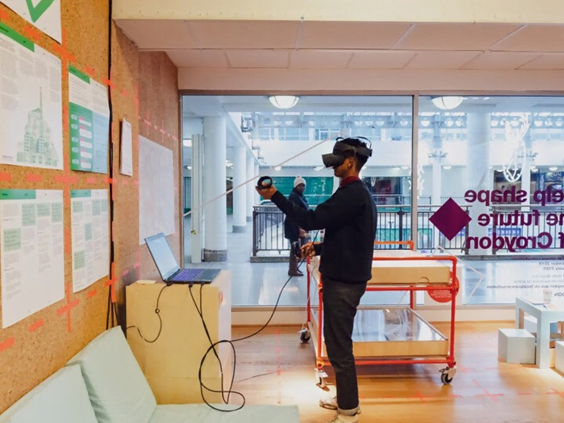
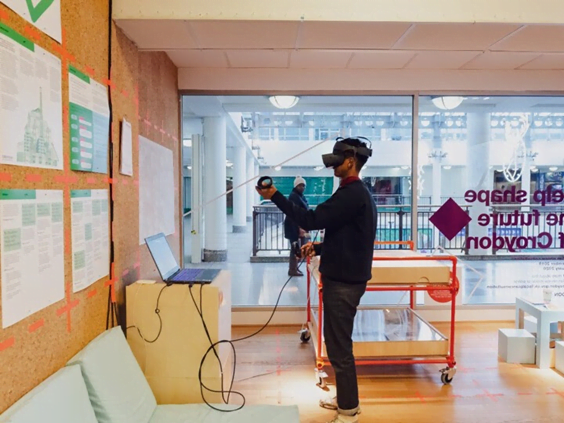
Councils have been crying out for ways to boost local engagement for a long time– but it’s difficult to get people interested in something that’s tricky to understand. Showing planned development in 3D and in context engages residents and allows them to look at proposals from almost unlimited viewpoints, whether that’s their front door, bedroom window or outside their favourite café. Increasing familiarisation with 3D digital representations through gaming and virtual reality headsets has meant that more people than ever are able to seize the opportunity to take an interest in their built environment and contribute effectively to developments and regeneration schemes going on around them.
Better, tech-led citizen engagement can help people demonstrate what a local area means to them, enabling genuine and useful evidence to be gathered. Using digital plans and digital platforms has the power to demystify the planning process and build trust throughout: citizens are provided with the means to ‘buy-in’, successfully engaged from the start and involved in the plans that shape their community.
The past year, although difficult, has provided a moment of pause in the industry. Let’s seize the opportunity to transform the planning system and address issues such as lack of trust, transparency, over-complexity, and under-engagement. Speeding up the planning system, getting much-needed housing built and revitalising town centres are fundamental to supporting the government’s levelling up agenda and future-proofing the industry. Driving efficiency, improving speed, and creating better relationships with local authorities and consultees is something that everyone in the industry wants to see.
Early adopters of the technology are one step ahead – with the race to digitise the system only set to speed up.
Alex Tosetti, Chief Commercial Officer, VU.CITY
Related Posts
Procast Group kicks off transformation of iconic Greenfield House in Alloa with phase one and two completion
An award-winning principal contractor has completed the initial phases of the transformation of the derelict Greenfield House in Alloa. Hamilton-based firm, Procast Group, has started the restoration of the classic out-of-use manor house in Clackmannanshire in...
Edenstone Group targets £100m turnover following Tai Derw acquisition
Edenstone Group has revealed ambitious growth plans following the acquisition of Tai Derw Developments Ltd as it targets £100 million turnover by 2028. The deal, agreed at the end of May, follows talks between Edenstone Group executive chairman Martin Taylor and Tai...
Transformational Cambridge East land acquisition to unlock a new community of 10,000+ homes, 9,000 jobs and significant economic growth
Homes England, with its National Housing Bank, and The Hill Group have today completed the acquisition of Cambridge East, a strategic site that will support the delivery of more than 10,000 new homes, thousands of jobs and a thriving new community. The...