
Ahead of the curve: Anticipating the future of the UK’s new build sector
The UK is in the midst of a green shift. Sustainable technology has existed for many years, but it wasn’t until pivotal events, like the 2015 Paris Agreement, that showed us in numbers how urgently we need to utilise this technology to avoid (or at least delay) environmental catastrophe. With the 1.5C limit ingrained into […]

Mar 28, 2022
The UK is in the midst of a green shift. Sustainable technology has existed for many years, but it wasn’t until pivotal events, like the 2015 Paris Agreement, that showed us in numbers how urgently we need to utilise this technology to avoid (or at least delay) environmental catastrophe.
With the 1.5C limit ingrained into the national consciousness, the UK government was one of the first world leaders to establish a target of net zero by 2050. With this came a swathe of changes to legislation. Such as the huge changes to Part L of the building regulations, which comes into force in June 2022.
Part L regulations are specific to the construction of new builds and will lead to the energy performance standard of every home having to be revamped. Current Part L regulations demand only 1 in 10 new build homes have renewable technology installed.
From July 2022, targets will skyrocket to 8 in 10 by 2025. This will put strain on accessing skilled workers, as the gap between the number of skilled labourers and the increase in demand for renewable technology widens.
Equally, the Future Homes and Buildings Standard hopes to see the emissions of British homes cut to a quarter of those built under current regulations. This is an admirable environmental goal. However, for a country already struggling to provide sufficient housing, are developers ready for such seismic changes in how homes in the UK can and should be built?
Lee Chadwick is the founder of renewable energy supplier and installation company, Futurelec, which he started up last October in response to these changing tides in net zero housing development.
“There’s a lot of work to do to be able to cope with demand”, Chadwick says. “There’s a huge opportunity to support housebuilders from a consultancy perspective once things become mandatory.”
A main issue that Chadwick identifies is the dip in quality assurance that is seen when any technology or product expands at a sudden rate, especially for a technology like solar, which has some lesser-known safety problems surrounding it.
“Just like any power, the direct current electricity produced from a Solar PV System can be dangerous”, Chadwick notes. “The issue is that solar panels are always on during daylight hours. If you were to drill an AC cable within a wall at your home for example, the circuit breaker within your fuse board would recognise that very quickly.

“Instantly, it would isolate that circuit breaker and it will make it safe very quickly. With DC and solar, that doesn’t currently happen. With a typical Solar PV installation once the suns irradiance is on the panels, they’re producing energy, and you can’t turn the sun off.”
One of Chadwick’s main goals with Futurelec, outside of making the transition to renewables as hurdle-free as possible for developers, is to educate them on the risks involved with an otherwise wunderkind technology.
Solar stands on the forefront of the renewable energy transition, as do the technologies that mitigate these risks, like Huawei’s fully optimized inverters with AFCI (Arc-Fault Circuit Interrupters) which reduce the DC current to 0 volts at roof level within 0.5 seconds. Chadwick is working with Huawei to develop a CPD course to help educate and train installers on how to avoid the potential risks of faulty installations.
“Solar power isn’t inherently dangerous”, insists Chadwick, but by applying the law of scale, he expects the number of fire incidents that have already been seen with the relatively few solar-powered homes to increase. Through education and awareness of preventative technology, he hopes to prevent the number of incidents rising in the years following the new Part L regulations.
“There’s only been 47 incidents over the last five or six years and they’re really quite isolated as we have now over a million homes with solar panels installed on them”, Chadwick assures, “But one is too many and there are easy ways to mitigate these risks. We need to educate our sector on the potential risks, how they happen and the steps and tools, like AFCIs, to use to prevent dangers from happening.
Indeed, net zero is a big box for the country as a whole to collectively check, within the coming decades. With his own experience in the sector (having cut his teeth at one of the biggest new build renewable energy companies in the UK), Chadwick sees Futurelec as a platform, which will hit the ground running, as demand for his services increase in the coming months.

“There’s a lot of changes happening, the gas supply is going to be cut off in new build homes within the next five years, which will require an electrically sourced heating system such as an ASHP and all new homes will be legally required to have electric vehicle (EV) charging points from next year, according to an announcement from Boris Johnson.
It isn’t just the technological infrastructure that stands in the way of a true net zero transition, though. It’s predicted that as many as 30,000 additional skilled workers will be needed over the next five years alone to keep up with demand.
This is why Chadwick, alongside Elevate EBP, will be visiting schools within the North West to discuss the career opportunities that will exist for students as the next generation of skilled workers.
Chadwick says, “We need to guard against the race to comply with legislation and ensure that through education and awareness that all renewable technology installations guarantee the safety of the occupants and preserve the integrity of the building.”
When it comes to net zero, the stakes have never been higher and neither have the ambitions to reach it, only time will tell how the country responds to what is predicted to be a revolution in energy.
Sponsored Advert

Related Posts

Developer shows support for St Austell school
Cornwall’s biggest housebuilder has donated £2,000 to supporters of a special school near St Austell. The donation from Persimmon Homes to Friends of Doubletrees School in St Blazey comes from the developer’s Community Champions programme that sees £700,000 donated to...
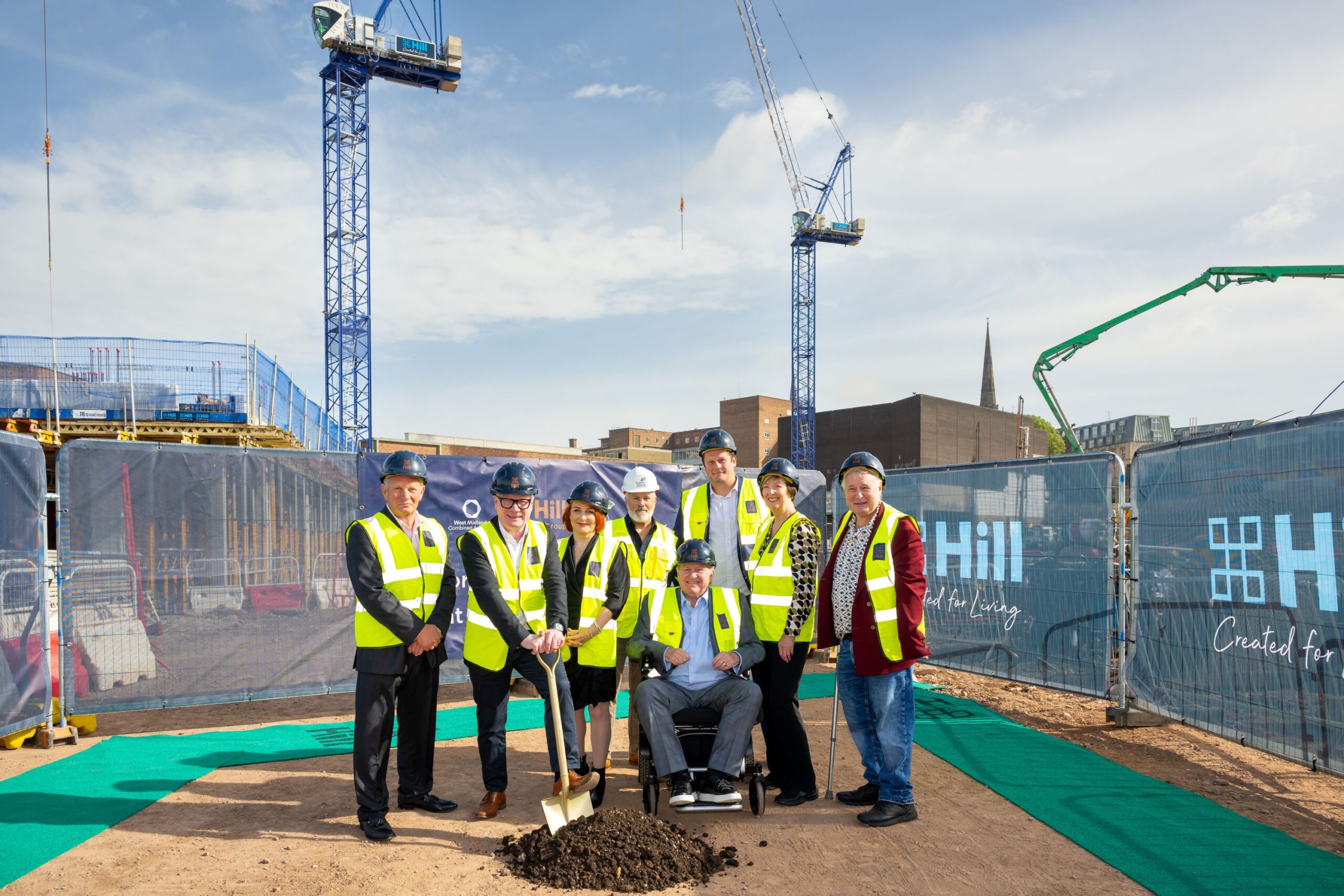
City Centre South reaches major milestone as first tower begins to rise
A major milestone has been reached at Coventry's transformational City Centre South regeneration project developed by The Hill Group, with the first tower now rising from the ground following the completion of demolition and extensive groundworks across the site....
New Forest District Council’s strategy puts prevention at the heart of tackling homelessness in the district
New Forest District Council (NFDC) has launched a strategy to prevent homelessness, support people at risk, and help residents find secure accommodation. The Homelessness and Rough Sleeping Strategy sets out NFDC’s priorities for tackling homelessness and...