
UK construction remains stifled by economic uncertainty and planning delays
RICS UK Construction Monitor Q3 2025 The latest RICS UK Construction Monitor reveals a further slowdown in construction activity across the UK, as economic uncertainty, regulatory challenges, and planning delays continue to weigh heavily on the sector. The headline construction workloads indicator fell to -8%, signalling a broader cooling in activity following a period of […]

Nov 6, 2025
RICS UK Construction Monitor Q3 2025
The latest RICS UK Construction Monitor reveals a further slowdown in construction activity across the UK, as economic uncertainty, regulatory challenges, and planning delays continue to weigh heavily on the sector.
The headline construction workloads indicator fell to -8%, signalling a broader cooling in activity following a period of stability earlier in the year. New project workloads declined noticeably, slipping to -13%, while repair and maintenance work held broadly steady at +2%.
Infrastructure remains the one bright spot, with activity still in positive territory (+8%), though momentum has eased compared to previous quarters. Communications, energy, and water & sewage infrastructure continue to show resilience, with the energy sector reporting the strongest performance at +29%.
Despite labour challenges easing slightly, firms still face recruiting difficulties, particularly in skilled trades and professional roles. However, 21% of firms reported net hiring growth in Q3, suggesting a cautious but continued commitment to workforce investment.
Survey respondents expect a modest improvement over the next 12 months, with infrastructure leading growth expectations at +24%, though down from +34%. Private residential and commercial expectations remain muted.
Business profitability remains a concern, with expectations for profit margins falling deeper into negative territory (-19%), reflecting cost pressures, competitive tendering, and prolonged regulatory processes.
Respondents across the UK highlighted common themes:
- Severe planning delays and capacity shortages within planning authorities
- Building Safety Act compliance delays slowing project starts
- Cautious credit conditions and funding barriers
- Skills shortages, especially in specialist trades
- Pressure from sustainability and regulatory demands
RICS Chief Economist, Simon Rubinsohn, said: “The latest RICS Construction Monitor show current activity levels to be broadly flat with only a modest uplift anticipated over the course next twelve months. As in the previous survey, it is infrastructure sector where workloads are viewed as likely to see the strongest gain with the residential trend remaining more subdued.
“Challenges around the current planning regime continue to be cited by respondents to the survey alongside financials but a lack of demand is also being raised more frequently. Despite this, the skills issue remains pertinent with a shortage of quantity surveyors continuing to be highlighted.
“This chimes with the results of the recently released RICS Surveying Skills Report which not only points to capacity constraints but also draws attention to the impact this shortage is having on innovation in the industry.”
Sponsored Advert

Related Posts
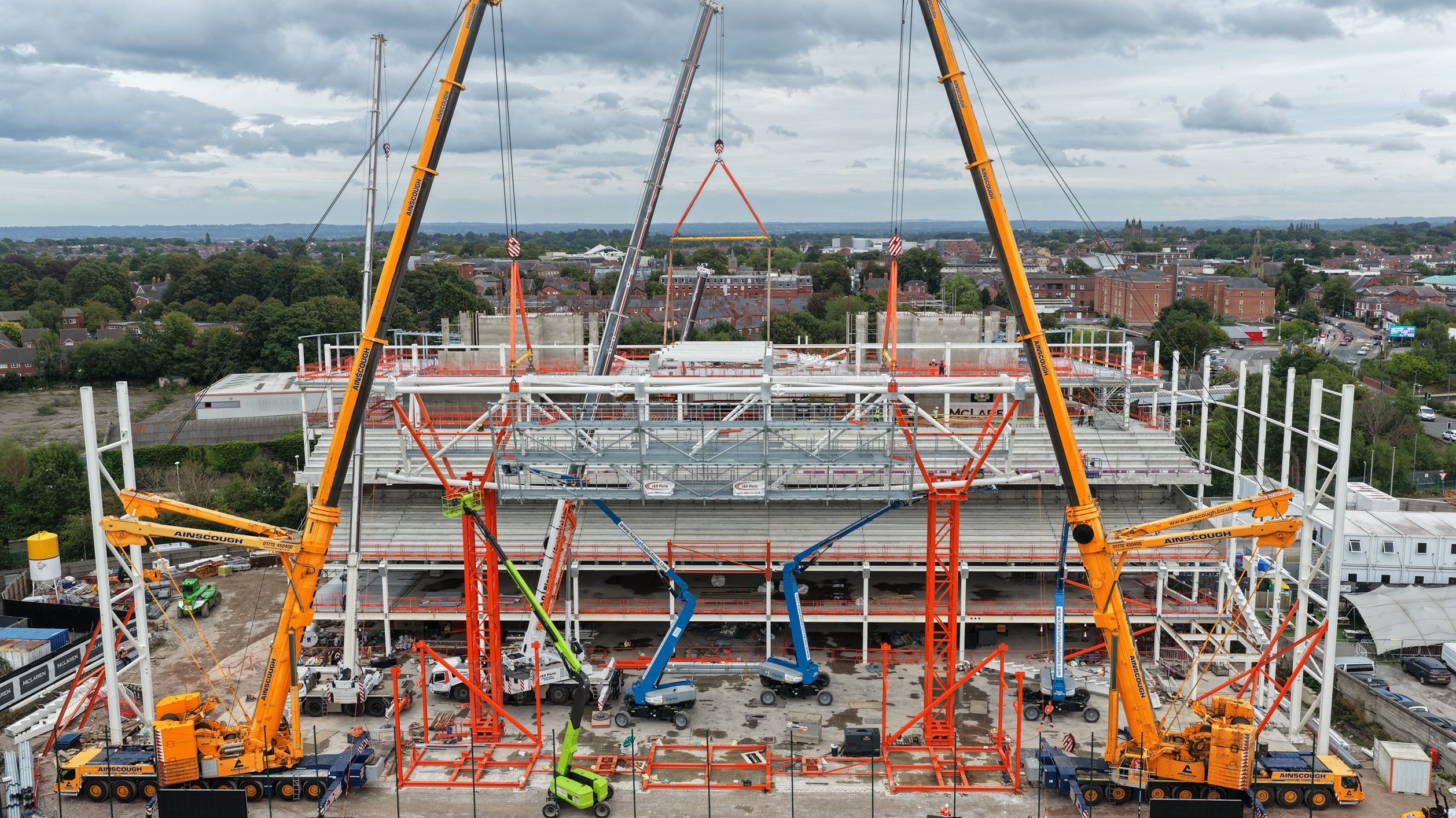
Steelwork reaches landmark milestone on Wrexham AFC’s new Kop Stand
The transformation of Wrexham AFC's new Kop Stand at the Cae Ras has reached a landmark construction milestone following the successful installation of the stand's 125-tonne inverted ribbon truss. One of the most technically complex engineering operations of the...

Pagabo launches pre-market engagement on workplace and interior transformation framework
LEADING national procurement specialist Pagabo has announced the latest procurement opportunity within its pipeline – the National Refit Framework for Workplace & Interior Transformation, which will be managed on behalf of contracting authority Red...

Bouygues UK Delivers New Student Accommodation Scheme in Fourth Phase of Hallsville Quarter Regeneration
Bouygues UK has completed Phase 4 of Hallsville Quarter in Canning Town, East London, delivering 375 purpose-built student accommodation rooms ahead of the 2026/27 academic year. The development is delivered through a joint venture between Crosstree Real Estate...