
Not In My Car Park
In suburbs across the country, communities are at war over car parking, with those who depend on the car for their day-to-day existence on one hand, and those who believe we have passed ‘peak car’ and are looking towards ‘active’ travel as a sustainable alternative. The Mayor of London and Transport for London (TfL) want […]
Mar 1, 2022
In suburbs across the country, communities are at war over car parking, with those who depend on the car for their day-to-day existence on one hand, and those who believe we have passed ‘peak car’ and are looking towards ‘active’ travel as a sustainable alternative.
The Mayor of London and Transport for London (TfL) want to build homes on car parks located at several of outer London’s underground stations. This is a win-win solution which tackles the desperate need for homes while at the same time ridding us of large expanses of tarmac that encourage car use. It neatly addresses the main principles of the London Plan.
But the users of those car parks disagree. In some cases they have built their lives around their ability to park at these suburban tube station car parks and they fear that is being ripped away from them. They are aghast that the planning authorities have no sympathy for them in this in regard and puzzled why this impact on their amenity is not being considered.
As ever there are two sides to this war. From a planning perspective, it is widely acknowledged that the private motor car creates a great many problems, not only in terms of carbon emissions and air quality, but also in that they unduly dominate the design and quality of entire townscapes. The need for cars and their parking spaces gobbles up space on our residential streets and in our town centres and in new developments that could be much better put to use for amenity.
But from a consumer point of view, the car is the essence of convenience, security and a social life. Some might say that we have passed ‘peak car’, but if that is the case we are still pretty close to the top of the peak.
The London Plan and TfL’s plans to build housing on car parks are blunt instruments that are trying to drive everyone towards a car-free or at least less car-dependent lifestyle. It is forcing people to change, which is never a good idea. On the whole, people don’t like change and don’t like being told what to do. They need to come around to an idea more gradually, such that it becomes their choice. And it’s going to take some serious time before the availability, reliability and choice afforded by public transport or other sustainable transport modes such as autonomous taxis take over and people decide to sell their cars, or at least not use them to drive to a train station car park.
But where does that leave us now? I think we should be looking at whether the parking – or at least a proportion of it – could be re-provided within new developments, but its design future-proofed such that it can be re-purposed in future for other uses.
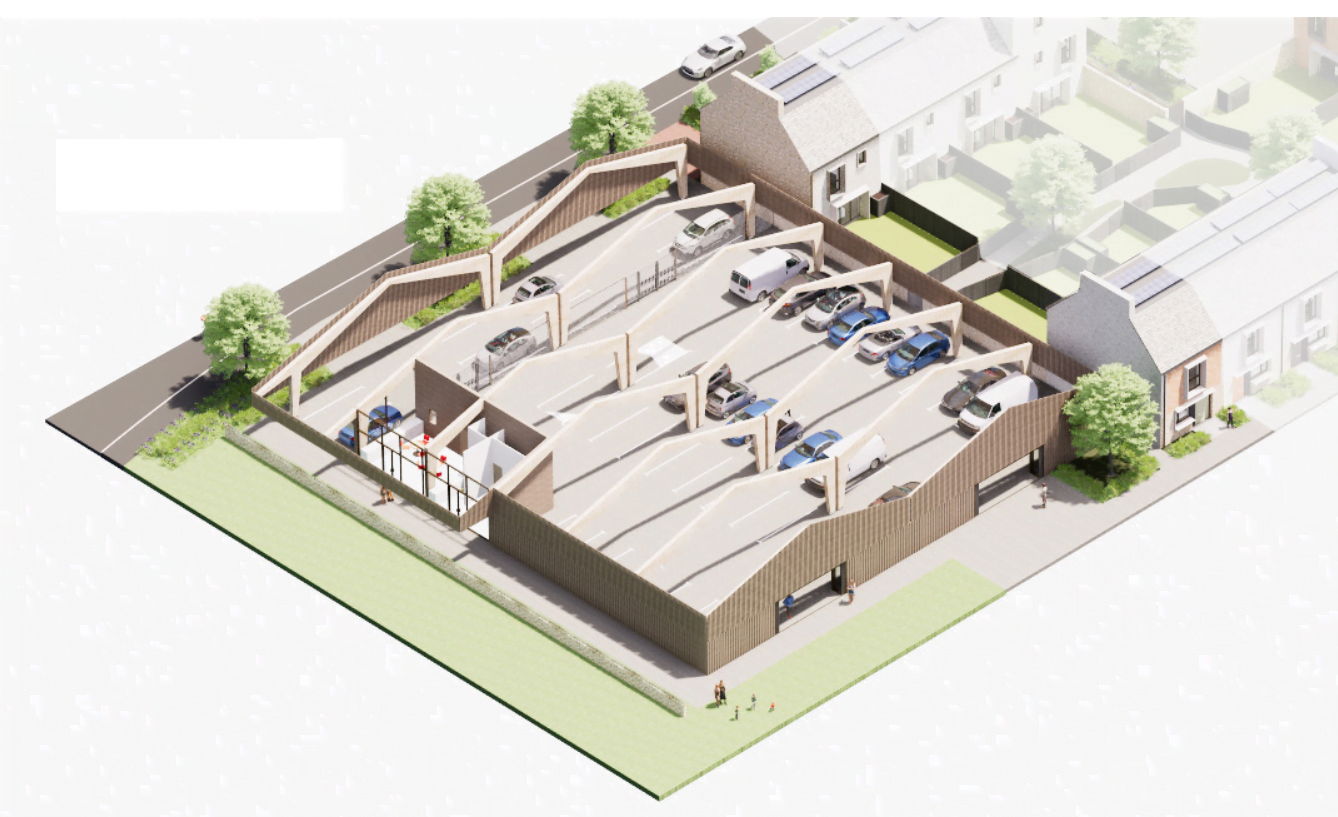
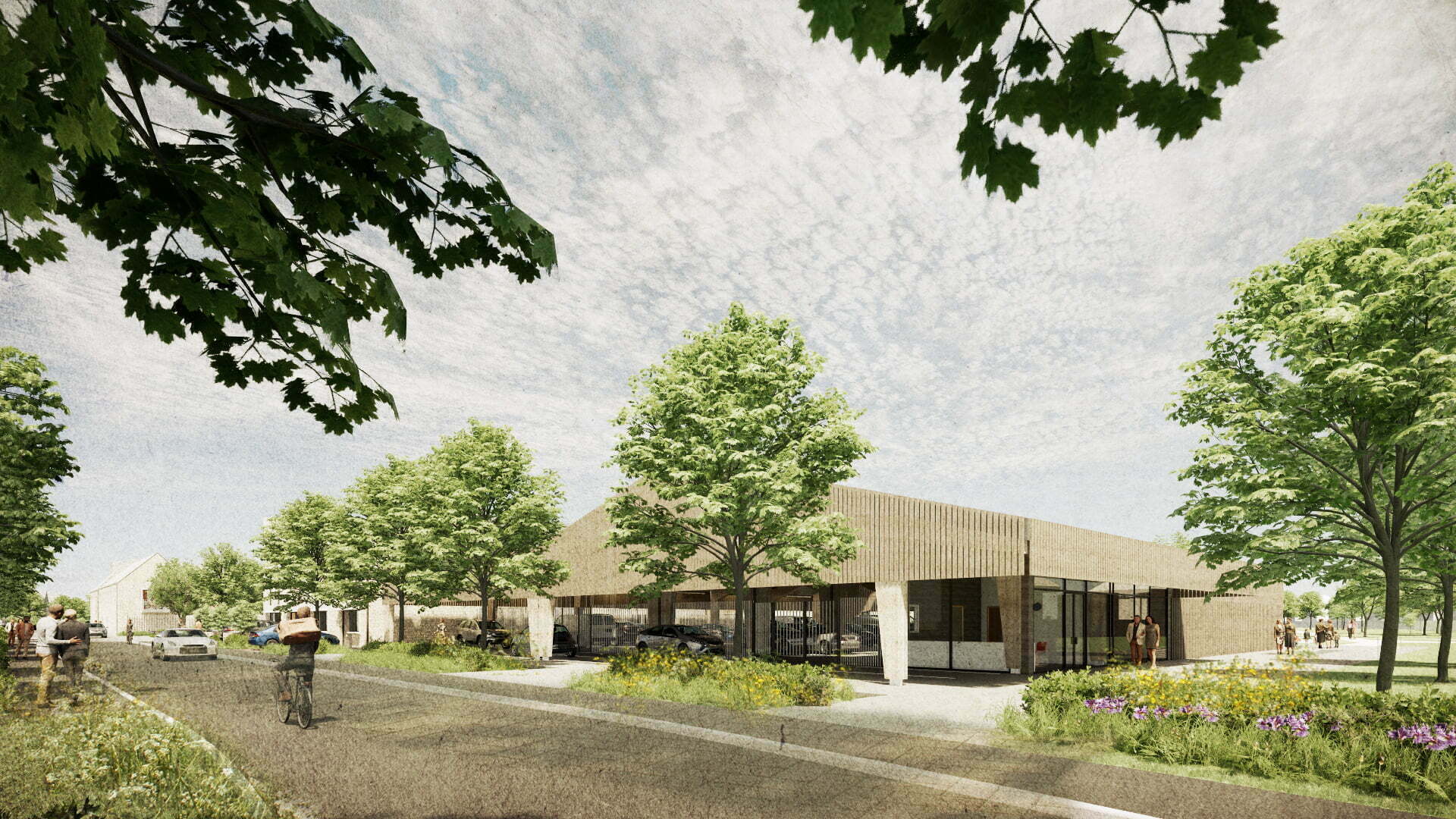
Take Blenheim Strategic Partners’ ‘parking barns’ - a pioneering approach to parking and community development which has been designed by Pollard Thomas Edwards for the Hill Rise development of Passivhauses which goes before West Oxfordshire District Council’s planning committee in spring 2022.
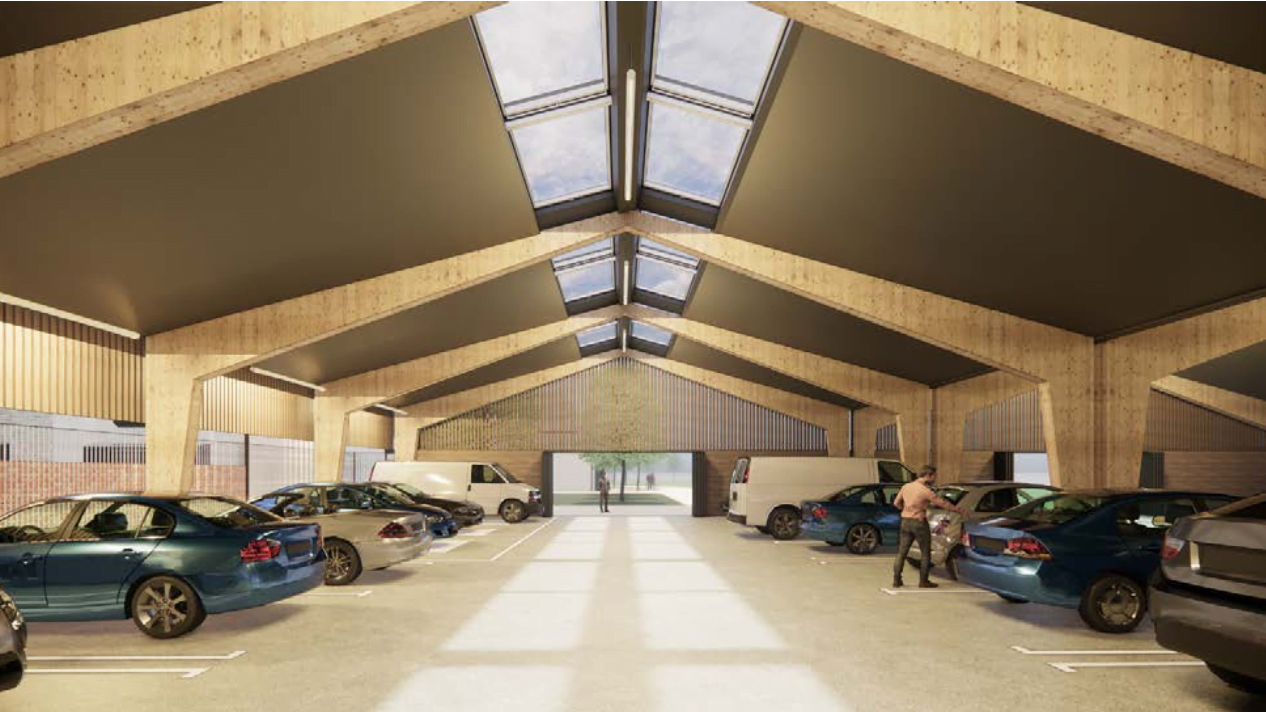
The invention benefits the environment by protecting the street scene, while also providing a community hub which can adapt over time. The barns are high quality, flexible spaces which serve, initially, as both car storage, flexible community spaces and include an e-commerce collection point, e-bike hire, amongst other useful community services. The design evolves as the community’s needs change. Initially parking barns (complete with electric chargers and space for car club use) are used primarily for car storage, but as transport trends move away from private car ownership, the spaces will evolve too – gradually evolving to accommodate new uses such as a Library of Things (equipment hire) and storage for electric bicycles and scooters. Ultimately the barns will be solely for community use, providing an excellent venue as a home-working hub and for pop-up events, markets and community meetings.
In Blenheim Strategic Partners’ proposed scheme, parking barns will provide supplementary parking for residents in a series of courtyards distributed along the primary street. Each courtyard cluster is small in scale, bound by low mortared limestone walls and integrating infiltration swales, structural planting and street trees. Each is strategically positioned on the green links throughout the development, connecting to other community facilities including another innovation, the Green Living Room.
The future of urban design could be transformed by ideas such as this which work with, not against, human nature – putting an end to the wars and creating a win-win situation for all.
Grant Leggett is the Head of Boyer London
Sponsored Advert

Related Posts
Tilbury Douglas completes construction of Luminous Oak Academy in Hampshire
Tilbury Douglas, a leading UK building, infrastructure, engineering and fit-out business, has completed construction of Luminous Oak Academy in Eastleigh, Hampshire, on behalf of Hampshire County Council and Solent Academies Trust. The school, awarded under the...
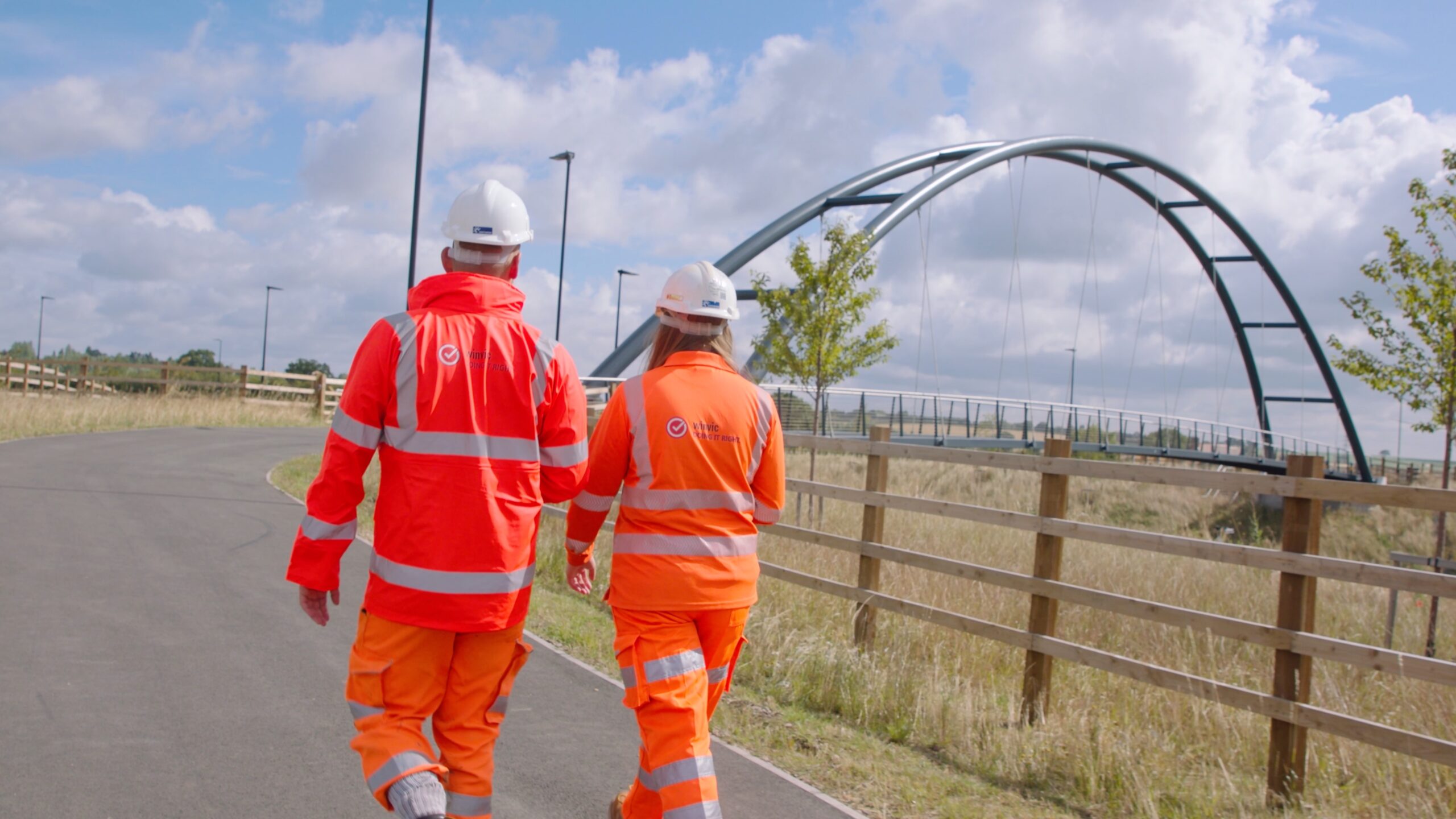
Winvic appointed by Durham County Council to deliver Witton-le-Wear Bridge scheme under NEPO framework
Winvic Construction Ltd, a leading main contractor that specialises in the design and construction of private and public sector works and civil engineering projects has been appointed by Durham County Council to design the Witton Le Wear Bridge scheme on the A68 - the...

G F Tomlinson renews its commitment to young people in sport
Midlands contractor, G F Tomlinson, has renewed its partnership with Derby County Community Trust (DCCT) for the 2026/27 season, continuing its support for the Trust’s Female Talent Pathway and its commitment to creating opportunities for young people across...