
Pro bono British architects transform orphans’ lives in Tanzania
Working with London-based charity Article 25, the pro bono team have designed an ultra-sustainable and off-grid children’s village to replace the derelict orphanage that children were living in. In Tanzania, roughly eight per cent of children under the age of 18 are orphaned, with an estimated 90,000 orphans in the northern region of Kilimanjaro alone. […]
Feb 7, 2024
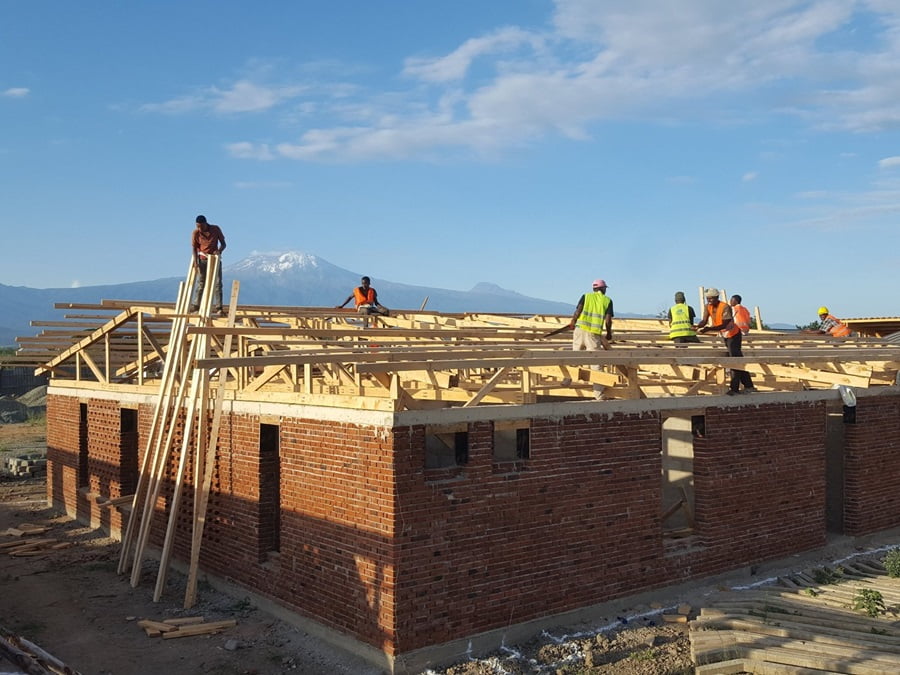
Working with London-based charity Article 25, the pro bono team have designed an ultra-sustainable and off-grid children’s village to replace the derelict orphanage that children were living in.
In Tanzania, roughly eight per cent of children under the age of 18 are orphaned, with an estimated 90,000 orphans in the northern region of Kilimanjaro alone. Ranked 154th out of 187 countries in the UN Human Development Index, Tanzania remains one of the poorest and least developed countries in the world.
The new Kao La Amani Children’s Village (the name means ‘peaceful settlement’ in Swahili) is in Boma Ng’ombe in the Kilimanjaro region of northern Tanzania and is home for 60 children with cottages each with its own live-in ‘Mama’, along with a large social block with a dining terrace, kitchen, games room, library, and laundry facilities. The village is designed to be highly sustainable and is operable entirely ‘off-grid’. All power is generated using solar PV panels, all water is provided by a borehole on site and then heated using solar hot water heaters, and the waste is filtered via septic tanks and a constructed wetland, meaning the site isn’t dependent on municipal sewage systems. Not only do these measures safeguard against Tanzania’s extreme weather conditions (where drought and flooding are both possible during the year), but they make the estate much cheaper to run: an essential in a country where 70 per cent of the population live on less than $2 a day. These sustainability features allow the village to run at minimal costs while protecting its natural resources and ensuring the children’s village will continue to provide to children in this area for decades to come. As a non-profit charity based in the UK, Article 25 provides low cost and ultra sustainable properties to NGOs by using pro-bono and low-bono expertise, allowing them to keep design and management costs significantly lower than commercial rates so that NGOs can afford to build that transformative hospitals and schools. They have completed over 100 building projects in 35 countries around the world, tackling challenges like earthquake risks, remote locations, extreme weather, and unreliable power supplies.
Sponsored Advert

Related Posts

Plasdŵr spine road works progress
Edenstone and Codi Group have released aerial photography showing progress on the main spine road into Porth yr Awen, part of Plasdŵr in Cardiff. The joint venture plans 184 homes on the £55m scheme, and Edenstone expects construction of the homes to begin in early 2027. Plasdŵr is planned as a 900-acre neighbourhood of around 7,000 homes, and the scheme includes 57 affordable homes.

Henry Boot issues profit warning
Henry Boot has warned that its full-year 2026 results will be significantly below market expectations, with an underlying loss before tax of £0m to £10m, according to Construction Enquirer. The property and land group also expects exceptional items of £40m to £45m, is in talks with lenders over banking covenants, and plans to present a new strategy in March 2027.

Wyatt Homes plans 75 Blandford homes
Wyatt Homes has submitted a reserved matters planning application to Dorset Council for the second phase of Lancaster Gate in Blandford Forum. The proposals cover 75 homes, a local centre with a convenience shop and community hall, relocated allotments and land safeguarded for a primary school, with 30% of homes affordable. Phase one, of 150 homes, is under construction.